
Choosing where your child takes their first real steps into structured learning is one of the more emotionally loaded decisions a parent makes. It isn’t just about ticking off a checklist of facilities or fees — it’s about handing over a few formative years of your child’s development to someone else’s care. For families living in Karachi, the good news is that a montessori school in Karachi is rarely more than a short drive away. The harder part is knowing which one actually deserves your trust.
Why the Montessori Method Still Matters?
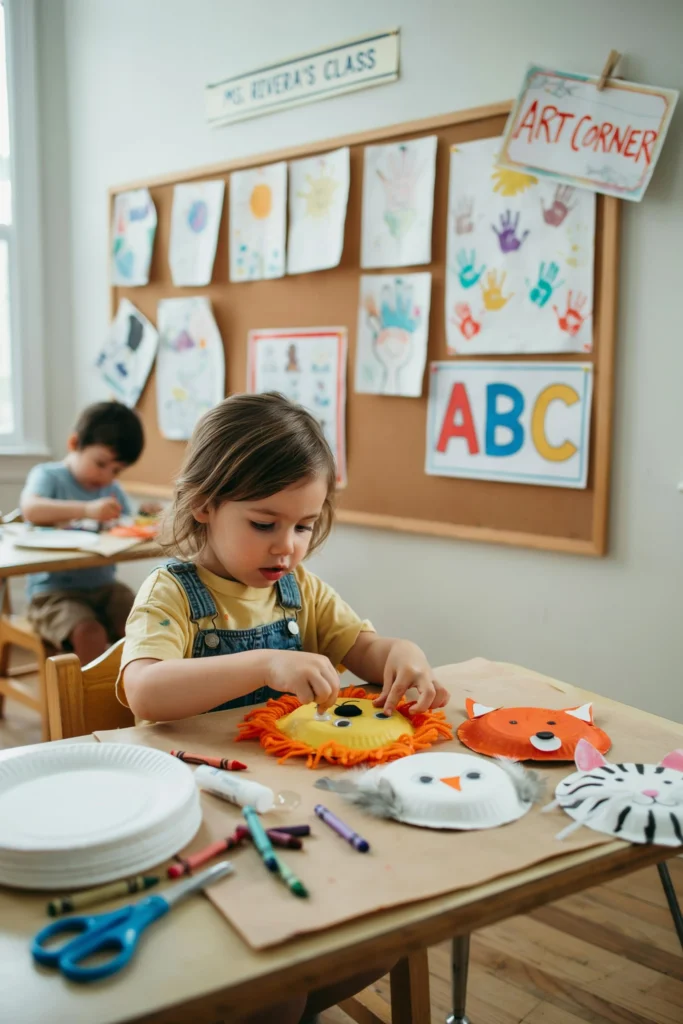
Before comparing schools, it helps to understand what you’re actually shopping for. The Montessori method, developed by Dr. Maria Montessori over a century ago, is built around child-led, hands-on learning rather than rote instruction. Children work with purpose-designed materials at their own pace, often in mixed-age classrooms, with teachers acting as guides rather than lecturers.
This isn’t just pedagogical folklore. Research on early Montessori education has linked it to stronger reading and math outcomes, better executive functioning, and improved social skills in preschool-age children, with some of these gains persisting years after children move on to primary school. This is where The Eon Academy, an international school, has an edge over many other Montessori schools. Independent analyses have also found that Montessori students tend to show greater self-control, stronger working memory, and a more positive overall relationship with school compared to peers in conventional classrooms.
That said, “Montessori” is not a trademarked or legally protected term. Any school can put the word on its signboard regardless of whether it follows authentic Montessori principles. Which is exactly why due diligence matters more than the label itself.
1. Verify the Curriculum Is Genuinely Montessori — Not Just Branded As One
This is the single most overlooked factor. Ask to see the classroom in session, not just an empty room during a tour. A genuine Montessori setup features:
Child-sized furniture and open shelving with hands-on learning materials
Children working individually or in small self-selected groups, not rows facing a teacher
Minimal use of worksheets, rewards, or punishment-based discipline
Trained “directresses” (Montessori-certified teachers) rather than general early-years staff
If a school’s daily schedule looks identical to a traditional kindergarten with a Montessori sign outside, that’s a red flag worth probing further.
2. Check Teacher Qualifications and Class Ratios
Montessori education depends heavily on the skill of the person guiding the classroom. Look for teachers holding a recognised Montessori Directress Diploma, not just a general teaching certificate. Ask about staff turnover too — high turnover in the early years disrupts the sense of continuity children need to feel secure enough to explore independently.
Class size matters just as much. A ratio that allows individual observation and guidance (rather than one teacher managing thirty children) is central to how the method actually works in practice.
3. Think About the Path Beyond Montessori
Here’s a question many parents forget to ask at enrollment: what happens after Montessori ends? Some schools only run through the pre-primary years, meaning you’ll need to plan a transfer around age five or six. Others operate as a continuum, carrying children from Montessori straight through primary and eventually into a secondary school in Bahadurabad Karachi, under one administrative roof and one consistent educational philosophy.
There are genuine advantages to the continuum model — fewer disruptive transitions, consistent record-keeping, and a school community that already knows your child’s strengths and struggles. But it isn’t automatically the better choice for every family. A strong Montessori foundation combined with a separate, well-matched secondary school can work just as well, provided you plan the transition deliberately rather than scrambling for admission at the last minute.
If continuity matters to you, ask directly during your school visit: does this institution offer a clear academic pathway from early years through to matriculation or O-Levels, or will you need to research secondary options separately in a couple of years?
4. Evaluate the Physical Environment
Montessori philosophy places real weight on the “prepared environment” — the idea that a well-organised, calm, accessible space is itself a teaching tool. When visiting, notice:
Natural light and ventilation
Safe, age-appropriate outdoor play areas
Cleanliness and general upkeep, particularly of washrooms and eating areas
Whether materials are organised, labelled, and accessible to children at their height
A cluttered or poorly maintained space, regardless of how good the marketing sounds, tends to reflect deeper administrative shortcuts.
5. Look Into the School's Approach to Assessment and Discipline
Traditional grading and competitive ranking sit awkwardly with Montessori principles, which emphasise intrinsic motivation over external reward. Ask how the school tracks a child’s progress — ideally through observation-based portfolios and developmental milestones rather than test scores alone at this age.
Equally, ask how the school handles behavioural issues. Authentic Montessori classrooms avoid punitive discipline in favour of natural consequences and redirection. A school that still relies heavily on scolding, punishment charts, or public reprimand isn’t fully aligned with the method it claims to teach.
6. Consider Fees Against What You're Actually Getting
Bahadurabad has schools spanning a wide fee range, and price alone tells you very little about quality. Instead of asking “is this affordable,” ask “what am I paying for.” Compare:
Teacher-to-student ratios
Material quality and how frequently they’re replaced or expanded
Whether fees include transport, meals, or extracurricular activities, or whether these are extra
Admission and annual charges versus monthly tuition
A cheaper school with a genuinely trained staff and well-maintained materials can outperform a pricier one running on brand reputation alone.
7. Talk to Current Parents, Not Just Admissions Staff
Admissions offices are, understandably, in the business of enrolling your child. Current parents have no such incentive. If possible, speak informally with a few families already sending their children to the school — ask about communication from teachers, how conflicts or concerns get handled, and whether their child actually seems to enjoy going to school. This kind of ground-level feedback often reveals more than any prospectus.
7. Talk to Current Parents, Not Just Admission Staff
Admissions offices are, understandably, in the business of enrolling your child. Current parents have no such incentive. If possible, speak informally with a few families already sending their children to the school — ask about communication from teachers, how conflicts or concerns get handled, and whether their child actually seems to enjoy going to school. This kind of ground-level feedback often reveals more than any prospectus.
8. Location, Timing, and Daily Logistics
It’s easy to underweight the practical side when you’re focused on pedagogy, but a long, exhausting commute undermines even the best curriculum. Consider drop-off and pick-up timing against your own schedule, availability of school transport, and how the school handles emergencies or early pickups. For families based in and around Bahadurabad, proximity also means you’re more likely to build a genuine parent community — something that matters more than it might seem during the early years.
Bringing It All Together
There’s no universal “best” school — only the best fit for your child’s temperament and your family’s priorities. Some children thrive in a small, quiet, highly traditional Montessori setting; others do better with a larger school that offers more social exposure and a clear academic runway into secondary education. Visit more than one option, ask uncomfortable questions, and trust what you observe over what you’re told.
Whether you’re currently comparing a montessori school in Bahadurabad Karachi for your toddler or already thinking two or three years ahead toward secondary admissions, the same principle applies: look past the signage and marketing language, and evaluate the actual classroom experience your child will have every single day.