The Indian Army is one of the world’s largest standing armies, with well over a million active-duty soldiers, and its rank structure carries the direct imprint of its heritage in the British Indian Army. When India gained independence in 1947, the new army kept the British-derived hierarchy of commissioned officers, non-commissioned officers and soldiers — but gradually Indianised it, replacing crowns with the Ashoka emblem, creating the unique Junior Commissioned Officer (JCO) tier, and, most recently, adding the Agniveer rank under the 2022 Agnipath scheme. This guide lists every Indian Army rank in order, from Lieutenant to General, with insignia images, and explains how promotion, pay and insignia reading actually work.
Indian Army ranks fall into three broad groups. Commissioned officers hold the President’s commission and command units, from platoons up to the entire army. Junior Commissioned Officers (JCOs) — Subedars and Risaldars — are a distinctive South Asian institution: senior soldiers promoted from the ranks who serve as the vital link between officers and jawans. Other Ranks (NCOs and soldiers) form the backbone of every battalion. Understanding these three tiers is the key to understanding the whole system.
Commissioned Officers (Highest to Lowest)
Commissioned officers are gazetted officers who lead formations, make tactical decisions and command units at every level. Promotion to Lieutenant, Captain and Major is normally by time-scale, while Colonel and above require selection boards and approved vacancies. The tables below show each rank’s shoulder insignia.
| Insignia | Rank | Role & Description |
|---|---|---|
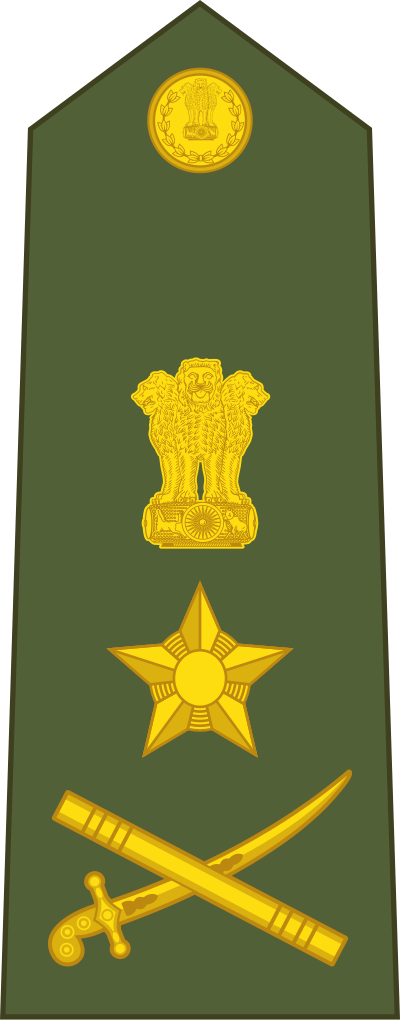 | General | The highest active rank, held only by the Chief of Army Staff (COAS). Commands the entire Indian Army. |
 | Lieutenant General | Three-star rank. Commands corps (e.g. XV Corps) or serves as Army Commanders and principal staff officers at Army Headquarters. |
 | Major General | Two-star rank. Typically commands a division (10,000–15,000 troops) or holds senior staff appointments. |
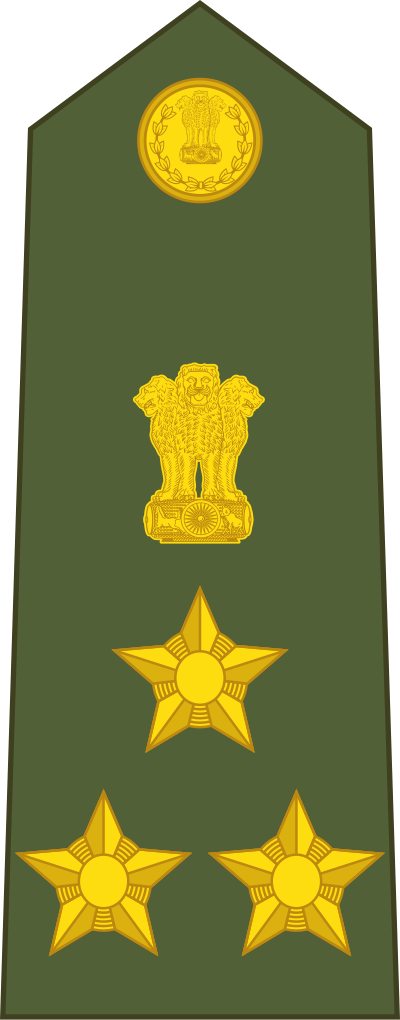 | Brigadier | One-star rank. Commands a brigade (3,000–5,000 soldiers) or serves as a brigade major and in key staff roles. |
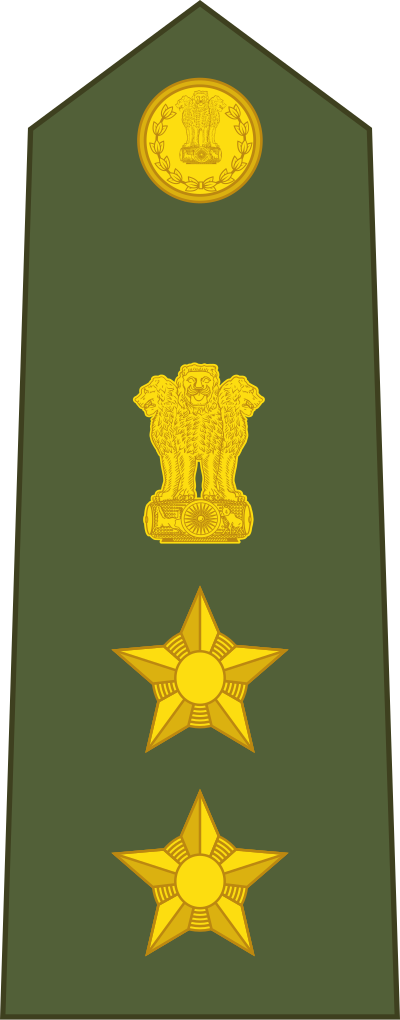 | Colonel | Commands an infantry battalion or artillery regiment (800–1,000 soldiers). The first rank earned purely by selection board. |
 | Lieutenant Colonel | Second-in-command of a battalion, or commands smaller independent units. Reached by time-scale after about 13 years. |
 | Major | Commands a company (120–150 soldiers) or serves as a staff officer. Promoted by time-scale after about 6 years. |
 | Captain | Leads a company as second-in-command or commands smaller sub-units. Time-scale promotion after about 2 years. |
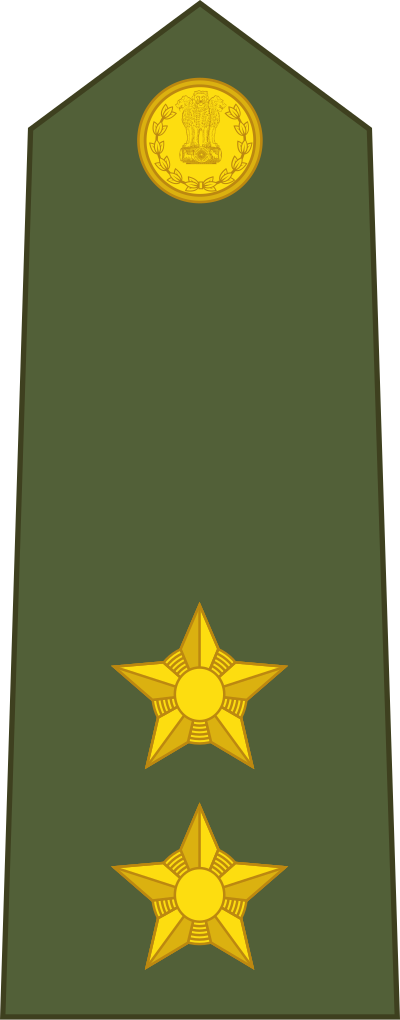 | Lieutenant | The first commissioned rank. Leads a platoon of about 30 soldiers after passing out from the Indian Military Academy or Officers Training Academy. |
Two ranks you won’t find on active lists: Field Marshal is a five-star honorary rank awarded only twice in Indian history — to Field Marshal Sam Manekshaw (1973), hero of the 1971 war, and Field Marshal K. M. Cariappa (1986), India’s first Commander-in-Chief. It is ceremonial and carries no command. The rank of Second Lieutenant was discontinued — all officers are now commissioned directly as Lieutenant on passing out.
Junior Commissioned Officers (JCOs)
The JCO tier is what sets the Indian Army apart from most Western armies. Inherited from the British Indian Army’s “Viceroy’s Commissioned Officers,” JCOs are promoted from the ranks after long, distinguished service. A Subedar Major is the senior-most JCO of a battalion and advises the commanding officer on the welfare, discipline and morale of the troops — he is often the most respected man in the unit. In cavalry, armoured corps and some artillery units, the equivalent titles are Naib Risaldar, Risaldar and Risaldar Major.
| Insignia | Rank | Role & Description |
|---|---|---|
 | Subedar Major (Risaldar Major in cavalry) | The senior JCO of a battalion. Advises the commanding officer on all matters concerning the jawans and is the regiment’s custodian of tradition. |
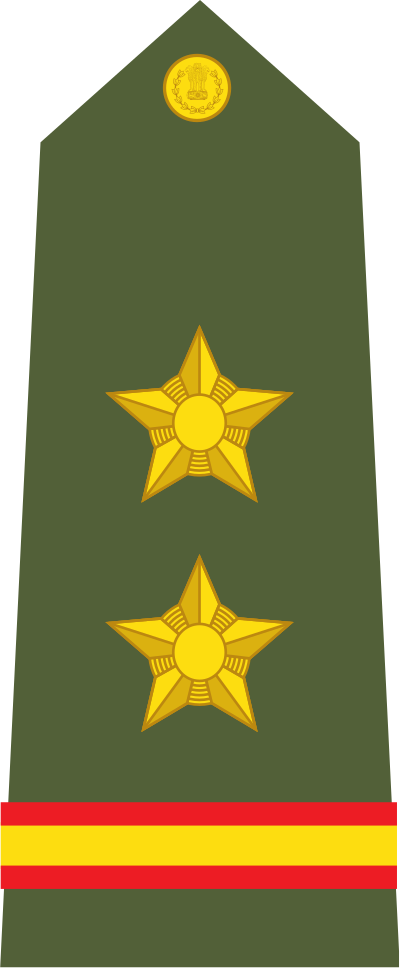 | Subedar (Risaldar in cavalry) | Senior JCO who may command a platoon or hold key administrative and training appointments within the unit. |
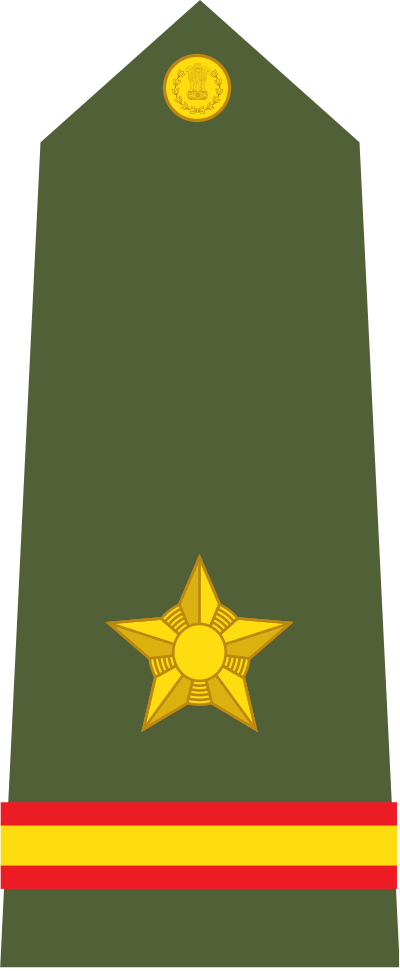 | Naib Subedar (Naib Risaldar in cavalry) | The entry-level JCO rank, promoted from senior Havildars. Assists officers at platoon and company level. |
Other Ranks (NCOs and Soldiers)
The “Other Ranks” — jawans and non-commissioned officers — do the fighting, the patrolling and the day-to-day work of the army. In 2022, the Agnipath scheme introduced the rank of Agniveer for soldiers recruited on a four-year tenure, creating a new entry point below Sepoy. Note that in the armoured corps a Sepoy-equivalent is called a Sowar and a Havildar-equivalent a Daffadar.
| Insignia | Rank | Role & Description |
|---|---|---|
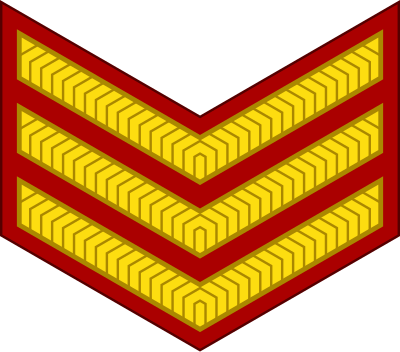 | Havildar (Daffadar in armoured corps) | Senior NCO. Commands a section or holds specialist appointments; the stepping stone to Naib Subedar. |
 | Naik | Junior NCO who leads a section of about 10 soldiers and assists the Havildar in training and administration. |
 | Lance Naik | The first NCO rank, promoted from Sepoy. Leads small teams and acts as second-in-command of a section. |
| no insignia | Sepoy (Sowar in armoured corps) | The standard trained soldier of the Indian Army. Wears no rank insignia — plain shoulder straps denote the rank. |
| no insignia | Agniveer | The newest rank, introduced under the Agnipath scheme (2022) for soldiers serving a four-year tenure. A distinct rank with no traditional insignia. |
How Promotion Works in the Indian Army
Promotion in the Indian Army follows two tracks. Time-scale promotion carries officers from Lieutenant to Captain (about 2 years), Major (about 6 years) and Lieutenant Colonel (about 13 years) largely automatically, provided they meet fitness, course and conduct standards. From Colonel upward, everything is by selection: promotion boards weigh annual confidential reports, command tenures, staff college qualifications and vacancies, so only a fraction of Lieutenant Colonels ever wear a Colonel’s Ashoka emblem and single star.
For Other Ranks, promotion is driven by years of service, trade tests and regimental seniority — a Sepoy becomes a Lance Naik, then Naik, then Havildar. The finest Havildars are promoted to Naib Subedar, entering the JCO tier, where further rise to Subedar and Subedar Major depends on seniority and the commanding officer’s recommendation. Honorary commissions as Honorary Lieutenant or Honorary Captain are occasionally granted to retiring Subedar Majors in recognition of exceptional service.
How to Read Indian Army Insignia
Indian Army officer insignia is worn on the shoulder straps and follows a logical pattern once you know the symbols. The Ashoka emblem (the national emblem’s lion capital) marks field officers and above. Five-pointed stars count the junior grades — two stars for a Lieutenant, three for a Captain. A crossed sword and baton marks general officers: one star with the crossed sword-and-baton for a Brigadier, two stars for a Major General, three for a Lieutenant General, and the Ashoka emblem with a single star and crossed sword-and-baton for a full General. NCO chevrons follow the British pattern — one chevron for Lance Naik, two for Naik, three for Havildar — while JCOs wear combinations of the Ashoka emblem and stars on their shoulder straps.
Officers vs JCOs vs NCOs: Key Differences
The three tiers differ in how they are appointed, what they do and where they come from. Commissioned officers receive the President’s commission after training at the Indian Military Academy, Officers Training Academy or National Defence Academy; they hold command authority and make operational decisions. JCOs are promoted from the ranks after 20-plus years of service; they do not hold a King’s/President’s commission in the same sense but are gazetted Group B officers who translate the officers’ orders into the practical language of the troops. NCOs and soldiers execute orders at section and platoon level. In practice, a young Lieutenant learns the trade from his Subedar Major and Havildars — the JCO institution is the army’s institutional memory.
Frequently Asked Questions
What is the highest rank in the Indian Army?
The highest active rank is General, held only by the Chief of Army Staff. Above it sits the ceremonial five-star rank of Field Marshal, awarded only twice — to Sam Manekshaw (1973) and K. M. Cariappa (1986) — and never as an active command rank.
What is a JCO in the Indian Army?
A Junior Commissioned Officer (Subedar Major, Subedar, Naib Subedar — or Risaldar equivalents in cavalry) is a senior soldier promoted from the ranks after long service. JCOs form a unique middle tier, inherited from the British Indian Army, that bridges commissioned officers and jawans.
Is there a Second Lieutenant rank in the Indian Army?
No. The rank of Second Lieutenant was discontinued, and all officers are now commissioned directly as Lieutenant on passing out from their training academy.
What is an Agniveer?
Agniveer is the newest rank in the Indian Army, introduced under the Agnipath scheme in 2022. Agniveers serve a four-year tenure, and the rank sits below Sepoy as the entry point for soldiers recruited under the scheme.
How long does it take to become a Major in the Indian Army?
Promotion to Major is by time-scale and normally comes after about 6 years of commissioned service, subject to meeting fitness, course and conduct requirements. Higher ranks — Colonel and above — require competitive selection boards.
Image credits: Rank insignia images via Wikimedia Commons, used under Creative Commons licences (CC BY-SA 3.0/4.0); see file pages for attribution.