
The Brazilian Armed Forces (Forças Armadas Brasileiras) — the Brazilian Army (Exército Brasileiro), the Brazilian Navy (Marinha do Brasil), and the Brazilian Air Force (Força Aérea Brasileira) — form the largest military in Latin America, with over 360,000 active personnel. Brazil’s rank system is defined by federal law (Act no. 6880 of 1980) and blends Portuguese, French, and British naval traditions into something distinctly Brazilian: army officers count stars on their shoulder pads, naval officers read gold sleeve stripes, and air force generals carry the unique title of Brigadeiro. This complete 2026 guide lists every Brazilian military rank in order, shows its insignia, explains what each rank does, how promotion works, and answers the most common questions.
One thing to know before you read the tables: Brazil is not a member of NATO, so the NATO codes shown (OF-1, OR-5, and so on) are approximate equivalents to help you compare Brazilian ranks with American or European ones — they are not official Brazilian designations. Brazil uses its own two-tier vocabulary: postos for commissioned-officer ranks and graduações for enlisted and NCO grades.
Commissioned Officer Ranks of the Brazilian Army
Brazilian Army officers earn their commission at the Academia Militar das Agulhas Negras (AMAN) in Resende, graduating as Aspirante-a-Oficial — an officer aspirant who serves about a year before promotion to second lieutenant. From there, officers climb eleven grades to General de Exército, commanding everything from a 30-soldier platoon to the Army’s territorial area commands. The table below lists every commissioned rank from lowest to highest, with its shoulder-pad insignia, approximate equivalent, and NATO-style grade.
| Insignia | Rank | Approximate Equivalent | Details |
|---|---|---|---|
 | Aspirante-a-Oficial | Officer Aspirant · OF-D | A newly graduated AMAN cadet serving a probationary year before commissioning; wears a single star on the shoulder pad and learns troop leadership under supervision. |
 | Segundo-Tenente (2º Tenente) | Second Lieutenant · OF-1 | The first true commissioned rank; leads a platoon of about 30 soldiers and masters the fundamentals of command. |
 | Primeiro-Tenente (1º Tenente) | First Lieutenant · OF-1 | Senior junior officer; leads a platoon or serves as a company executive officer, second-in-command of a company. |
 | Capitão | Captain · OF-2 | Commands a company of roughly 100–150 soldiers; the first rank carrying full independent command responsibility. |
 | Major | Major · OF-3 | Serves as a battalion executive officer or a staff officer at brigade level, planning operations and training. |
 | Tenente-Coronel | Lieutenant Colonel · OF-4 | Commands a battalion of several hundred soldiers; the senior field-grade rank before colonel. |
 | Coronel | Colonel · OF-5 | Commands a regiment or serves as a brigade chief of staff; selection for general officer begins at this level. |
 | General de Brigada | Brigadier General · OF-6 | Commands a brigade of several thousand soldiers; the first of the general-officer (oficiais-generais) grades. |
 | General de Divisão | Major General · OF-7 | Commands a division or holds a major staff appointment at Army headquarters in Brasília. |
 | General de Exército | Lieutenant General · OF-8 | Commands one of the Army’s territorial area commands; the Army Commander (Comandante do Exército) holds this rank. |
 | Marechal | Marshal · OF-10 | The highest rank in the Brazilian Army, conferred only in wartime as a national dignity — not a step on the normal promotion ladder. |
Marechal is a wartime dignity, not a career grade. Brazilian law reserves it for exceptional wartime service, so no officer is ever promoted to it in peacetime — the effective top of the career ladder is General de Exército.
NCOs and Enlisted Soldiers of the Brazilian Army
The Brazilian Army’s other ranks — the praças — run from Soldado (private) up to Subtenente, the senior enlisted grade. Sergeants are trained at the Escola de Sargentos das Armas (EsSA), while Cabos and Soldados earn their stripes in the corps. Note that Brazil has no direct equivalent of OR-8: the ladder jumps straight from Primeiro-Sargento to Subtenente.
| Insignia | Rank | Approximate Equivalent | Details |
|---|---|---|---|
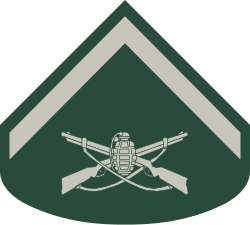 | Soldado | Private · OR-2 | The entry grade for recruits after basic training; serves in the ranks of an infantry squad, artillery battery, or support unit. |
 | Taifeiro (2ª and 1ª Classe, Taifeiro-Mor) | Steward grades | A specialist career track for mess and service duties; Taifeiro-Mor is the senior grade of this line, with its own sleeve badges. |
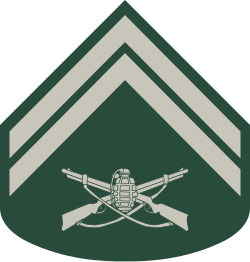 | Cabo | Corporal · OR-4 | The first NCO grade; leads a small fire team and assists the sergeants in training and discipline. |
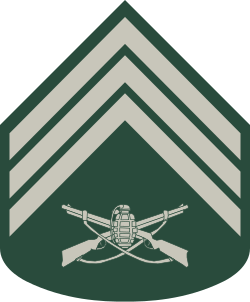 | Terceiro-Sargento (3º Sargento) | Sergeant · OR-5 | A graduate of the EsSA; leads a squad or a specialist section and is the backbone of daily troop training. |
 | Segundo-Sargento (2º Sargento) | Staff Sergeant · OR-6 | Senior squad leader or platoon sergeant; supervises junior sergeants and corporals. |
 | Primeiro-Sargento (1º Sargento) | Sergeant First Class · OR-7 | The senior sergeant of a company; advises the company commander and mentors every NCO under him. |
 | Subtenente | Warrant Officer · OR-9 | The highest enlisted grade in the Brazilian Army; a veteran adviser to officers and the standard-bearer of the NCO corps. |
How to Read Brazilian Army Insignia
Brazilian Army officer rank is read from the shoulder pads (platinas): stars mark the grade, growing in number as rank rises — one star for the Aspirante-a-Oficial, up through the gold stars of the field grades, to the starred generals’ boards. Unlike the navy and air force, army shoulder pads do not show the officer’s branch — branch is indicated elsewhere, such as on cuffs and sleeves of the dress uniform. Enlisted grades wear chevrons (divisas) on the sleeve: angled stripes for sergeants, with the Subtenente distinguished by its own badge above the chevrons. The Taifeiro line and Cabo grades carry their own simpler sleeve devices.
Commissioned Officer Ranks of the Brazilian Navy
The Marinha do Brasil guards over 7,400 km of coastline and the Amazon river system. Its officers graduate from the Escola Naval in Rio de Janeiro as Guarda-Marinha (midshipman) before commissioning. Brazilian naval titles follow the classic Portuguese tradition — Capitão de Mar e Guerra, Capitão de Fragata, Capitão de Corveta — named for the classes of warship each rank once commanded.
| Insignia | Rank | Approximate Equivalent | Details |
|---|---|---|---|
 | Guarda-Marinha | Midshipman · OF-D | An Escola Naval cadet in the final phase of training; serves at sea under instruction before commissioning as a junior officer. |
 | Segundo-Tenente | Sub-Lieutenant · OF-1 | The most junior commissioned naval officer; stands watches and leads a division of sailors aboard ship. |
 | Primeiro-Tenente | Lieutenant (junior grade) · OF-1 | Division officer aboard ship or junior staff officer ashore. |
 | Capitão-Tenente | Lieutenant · OF-2 | Heads a ship’s department or serves as executive officer of a small vessel. |
 | Capitão de Corveta | Lieutenant Commander · OF-3 | Executive officer of a frigate or commander of a patrol vessel or submarine. |
 | Capitão de Fragata | Commander · OF-4 | Commands a frigate, submarine, or naval air squadron; senior department head on capital ships. |
 | Capitão de Mar e Guerra | Captain · OF-5 | Commands major warships such as the fleet flagship or a naval base; the senior sea-command grade. |
 | Contra-Almirante | Rear Admiral · OF-7 | Commands a task group or a naval district; the first flag-officer grade. |
 | Vice-Almirante | Vice Admiral · OF-8 | Holds fleet-level operational command or a senior post at Navy headquarters in Brasília. |
 | Almirante de Esquadra | Admiral · OF-9 | The Navy Commander (Comandante da Marinha) holds this rank; the highest grade reached in normal service. |
 | Almirante | Admiral of the Fleet · OF-10 | The five-star summit of the naval ladder, reserved for exceptional wartime appointments — like the Army’s Marechal, it is a dignity rather than a career step. |
Sailors of the Brazilian Navy: Enlisted Ranks
The Navy’s enlisted sailors — the praças da Armada — train at the Escolas de Aprendizes-Marinheiros and the Centro de Instrução Almirante Wandenkolk (CIAW). Their sleeve badges reflect Brazil’s naval heritage, and, as in the Army, the ladder jumps from Primeiro-Sargento straight to Suboficial.
| Insignia | Rank | Approximate Equivalent | Details |
|---|---|---|---|
 | Marinheiro | Seaman · OR-2 | The entry grade for sailors after basic naval training; works a ship’s decks, engine spaces, or weapons systems. |
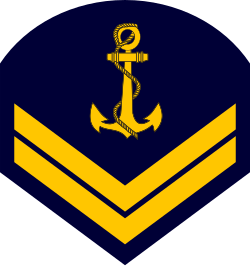 | Cabo | Leading Seaman · OR-4 | First leadership grade at sea; supervises a small working party. |
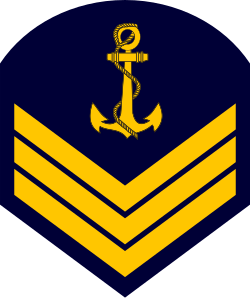 | Terceiro-Sargento | Petty Officer 3rd Class · OR-5 | Junior petty officer; leads a section within a ship’s department. |
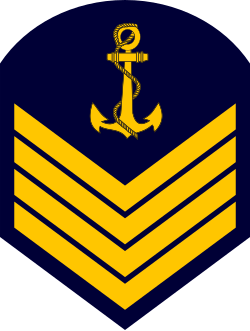 | Segundo-Sargento | Petty Officer 2nd Class · OR-6 | Experienced petty officer supervising a work centre or watch section. |
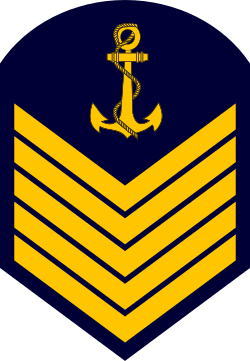 | Primeiro-Sargento | Petty Officer 1st Class · OR-7 | Senior petty officer of a department; the chief’s right hand. |
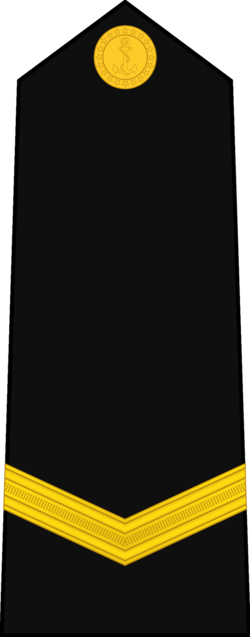 | Suboficial | Chief Petty Officer · OR-9 | The senior enlisted sailor; the technical master and mentor of the ship’s company. |
How to Read Brazilian Navy Insignia
Brazilian naval officers wear their rank on the cuff as gold sleeve stripes (galões) — the more and wider the stripes, the higher the rank, from a single thin stripe for a Guarda-Marinha up to the broad bands of an admiral, with a loop (the “executive curl” inherited from the Royal Navy tradition) marking commissioned officers. On the shoulder boards, stars mark the flag ranks — three for Contra-Almirante up to five for Almirante — and the shoulder pads also carry a device showing the officer’s specialty corps: the fleet (Corpo da Armada), the marines (Fuzileiros Navais), engineers, intendants, or health corps. Enlisted sailors wear sleeve badges with chevrons and specialty marks.
Commissioned Officer Ranks of the Brazilian Air Force
The Força Aérea Brasileira (FAB), founded in 1941 from the merger of the Army and Navy air arms, keeps the Army’s company and field-grade titles — Capitão, Major, Coronel — but its generals are uniquely Brazilian: Brigadeiro, Major-Brigadeiro, and Tenente-Brigadeiro, titles that date to the earliest days of military aviation. Air Force officers graduate from the Academia da Força Aérea (AFA) in Pirassununga as Aspirante-a-Oficial.
| Insignia | Rank | Approximate Equivalent | Details |
|---|---|---|---|
 | Aspirante-a-Oficial | Officer Aspirant · OF-D | A newly graduated AFA cadet in the probationary year before commissioning; trains operationally under supervision. |
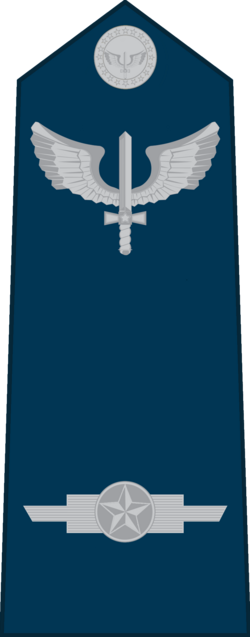 | Segundo-Tenente | Second Lieutenant · OF-1 | Junior officer and pilot under training; flies operational missions under supervision. |
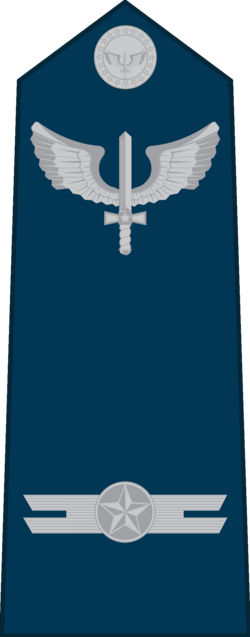 | Primeiro-Tenente | First Lieutenant · OF-1 | Qualified pilot or specialist officer flying and serving operationally. |
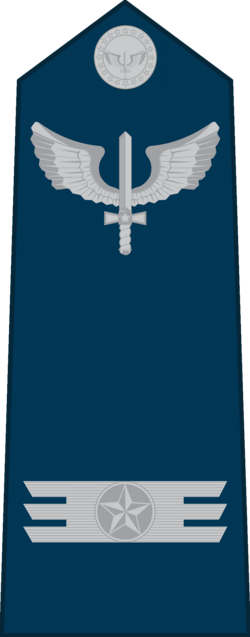 | Capitão | Captain · OF-2 | Leads a flight; an experienced operational pilot or section chief. |
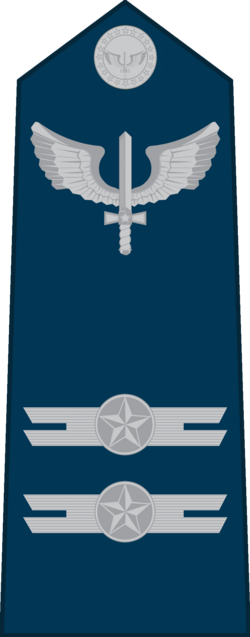 | Major | Major · OF-3 | Senior pilot; commands a squadron section or holds staff appointments. |
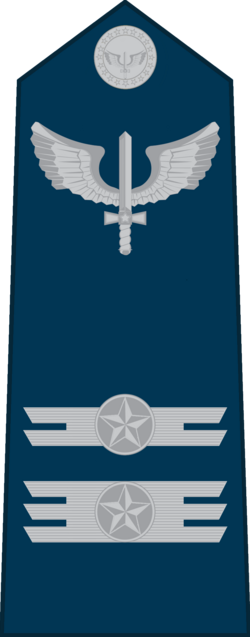 | Tenente-Coronel | Lieutenant Colonel · OF-4 | Commands a flying squadron or a major support unit. |
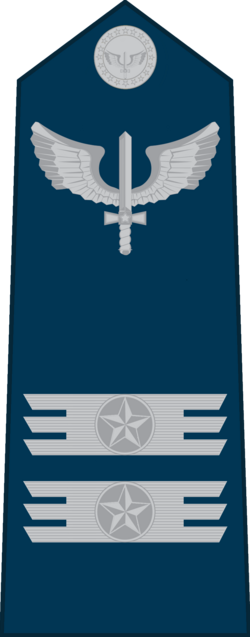 | Coronel | Colonel · OF-5 | Commands an air base or a wing; the gateway to the Brigadeiro grades. |
 | Brigadeiro | Brigadier / Air Commodore · OF-6 | The first air-officer grade; holds senior command and staff appointments across the FAB. |
 | Major-Brigadeiro | Major General / Air Vice-Marshal · OF-7 | Commands a regional air command or holds a major headquarters appointment. |
 | Tenente-Brigadeiro | Lieutenant General / Air Marshal · OF-8 | The Air Force Commander (Comandante da Aeronáutica) holds this rank; the highest grade reached in normal service. |
 | Marechal-do-Ar | Marshal of the Air Force · OF-10 | The five-star summit of the FAB, reserved for wartime as a national dignity — and, by regulation, it can only be held by an aviator. |
Marechal-do-Ar (Marshal of the Air Force) mirrors the Army’s Marechal: a wartime-only dignity, never a peacetime promotion. Uniquely, the regulations require that it be held by an aviator — reflecting that only flying officers can reach the very top of the FAB.
Airmen of the Brazilian Air Force: Enlisted Ranks
FAB enlisted airmen train at the Escola de Especialistas de Aeronáutica (EEAR) in Guaratinguetá, the largest enlisted training school in Latin America. Their career ladder mirrors the Army’s, from Soldado to Suboficial.
| Insignia | Rank | Approximate Equivalent | Details |
|---|---|---|---|
 | Soldado | Airman · OR-2 | Entry grade for airmen after basic training; serves in security, logistics, or support duties. |
 | Taifeiro (2ª and 1ª Classe, Taifeiro-Mor) | Steward grades | The mess and service career track of the FAB, with 2nd class, 1st class, and senior Taifeiro-Mor grades. |
 | Cabo | Corporal · OR-4 | First NCO grade; leads a small team of airmen. |
 | Terceiro-Sargento | Sergeant · OR-5 | An EEAR graduate; a specialist technician or section leader. |
 | Segundo-Sargento | Staff Sergeant · OR-6 | Senior technician supervising maintenance crews or administrative sections. |
 | Primeiro-Sargento | Sergeant First Class · OR-7 | Senior NCO of a squadron or unit; advises the commander on the enlisted force. |
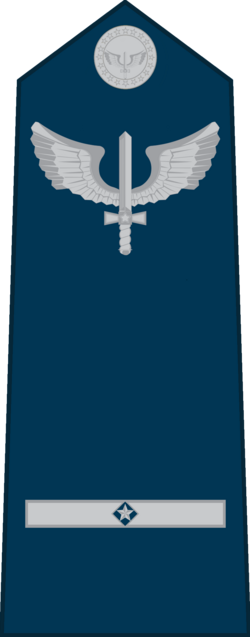 | Suboficial | Warrant Officer · OR-9 | The highest enlisted grade in the FAB; a veteran technical master and mentor. |
How to Read Brazilian Air Force Insignia
Air Force officer insignia follows the Army’s system of stars on shoulder pads, but the generals’ boards are unmistakable: the Brigadeiro grades carry their stars in a distinctive arrangement that sets them apart from Army generals at a glance. Unlike the Army, FAB shoulder pads also indicate the officer’s specialty branch — aviators, engineers, intendants, medics, and other cadres each carry their branch device on the pad (the examples in the table above are shown without branch marks, except for Marechal-do-Ar and Tenente-Brigadeiro, which by regulation only aviators may hold). Enlisted airmen wear chevron-style sleeve badges like their Army counterparts.
How Promotion Works in the Brazilian Military
Promotion in Brazil’s armed forces blends seniority (antiguidade), merit (merecimento), minimum time in grade (interstício), and professional education. The pipeline starts at the service academies — AMAN (Army, Resende), the Escola Naval (Navy, Rio de Janeiro), and AFA (Air Force, Pirassununga) — whose graduates serve as Aspirante-a-Oficial or Guarda-Marinha before commissioning as Segundo-Tenente. Junior officers rise largely by seniority provided their conduct and evaluations are clean; from Major upward, merit selection and competitive boards dominate, and the staff colleges — ECEME (Army), the Escola de Guerra Naval (Navy), and ECEMAR (Air Force) — become near-mandatory for advancement to the senior field grades.
Enlisted personnel climb through their own schools and courses: the Army’s EsSA produces sergeants, the Navy’s CIAW and apprentice-sailor schools produce petty officers, and the Air Force’s EEAR trains its sergeants. Outstanding NCOs can cross into the officer corps through internal selection, though the academies remain the main route. At the very top, promotion to the general and flag grades — and the appointment of each service’s commander — is an act of the President of the Republic, and mandatory retirement ages keep the senior ranks turning over.
Frequently Asked Questions
What is the highest rank in the Brazilian military?
The highest ranks are Marechal (Army), Almirante (Navy), and Marechal-do-Ar (Air Force) — but all three are wartime-only dignities, never awarded in peacetime. The highest ranks actually held in normal service are General de Exército, Almirante de Esquadra, and Tenente-Brigadeiro, the grades of the three service commanders.
Is Brazil in NATO? What do the NATO codes mean?
No — Brazil is not a NATO member. The OF/OR codes in this guide (OF-1, OR-5, and so on) are approximate equivalents included only so you can compare Brazilian ranks with US or European ones. Brazil’s official system, set by Act no. 6880 of 1980, uses postos (officer ranks) and graduações (enlisted grades).
What is an Aspirante-a-Oficial?
An Aspirante-a-Oficial (“officer aspirant”) is a newly graduated academy cadet serving a probationary year before full commissioning — roughly equivalent to an officer candidate or a US-style cadet on active duty. After about a year of supervised service, the aspirant is promoted to Segundo-Tenente (second lieutenant). The Navy’s equivalent is the Guarda-Marinha (midshipman).
Why do Brazilian Air Force generals have different titles from Army generals?
The FAB’s general grades — Brigadeiro, Major-Brigadeiro, and Tenente-Brigadeiro — date to the 1941 creation of the Air Force and the early romance of military aviation, when “brigadier” titles distinguished air commanders. Below the general grades, the Air Force shares the Army’s titles (Capitão, Major, Coronel), and its enlisted ladder is nearly identical.
How do you become an officer in the Brazilian military?
The main route is the service academies: AMAN in Resende for the Army, the Escola Naval in Rio de Janeiro for the Navy, and AFA in Pirassununga for the Air Force. Entry is by competitive national exam (concurso) after secondary school; cadets study for about four to five years, graduate as Aspirante-a-Oficial or Guarda-Marinha, and then commission as Segundo-Tenente.
What do Brazilian rank insignia look like?
Army and Air Force officers wear stars on shoulder pads — the count rising with rank — while enlisted personnel wear sleeve chevrons. Naval officers instead read gold sleeve stripes on the cuff (with a loop marking commissioned status) and stars on shoulder boards for admirals; navy and air force shoulder pads also display the officer’s specialty corps device.
Image credits: Rank insignia illustrations by Skjoldbro (CC BY-SA 4.0), Cleberson Carlos (CC BY-SA 4.0), Blackcloud11 (CC BY-SA 3.0), Jocor107 (CC BY 4.0), João vrs (CC0), and Greenshed (public domain), via Wikimedia Commons.