
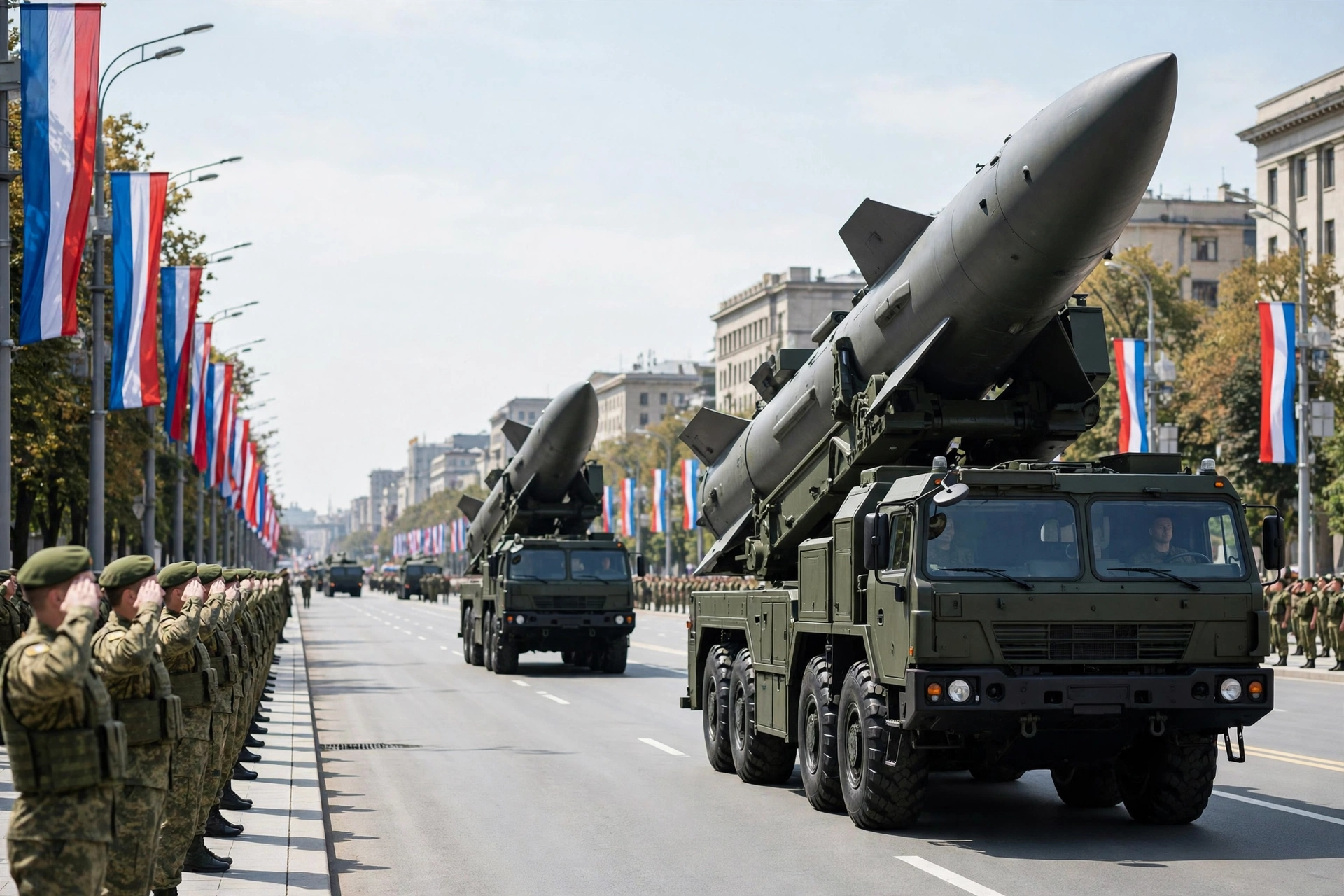
Muslim Atomic Power Countries
Nuclear Weapons in the Muslim World — the documented facts: which states pursued the bomb, which one built it, and which programmes came to an end.
Nuclear weapons remain the ultimate currency of strategic power, held by only nine states worldwide. Of the world’s roughly fifty Muslim-majority countries, just one — Pakistan — possesses a nuclear arsenal. Others have travelled part of the way down the nuclear road: some built civilian programmes, some ran clandestine weapons efforts, and every one of those efforts ended in dismantlement, war or diplomacy. This article sets out the publicly documented history, country by country.
Everything below is drawn from public sources — government statements, International Atomic Energy Agency (IAEA) reports and respected open-source research institutes such as SIPRI and the Federation of American Scientists (FAS). Where figures are estimates, we say so and name the source. There is no speculation here and no technical detail about weapons — only history and geopolitics.
Pakistan: The Only Muslim Nuclear Power
Pakistan is the only Muslim-majority country to have developed and tested nuclear weapons. Its programme began in January 1972, when Prime Minister Zulfikar Ali Bhutto convened the country’s scientists at Multan, weeks after the 1971 war with India — a war that cost Pakistan its eastern wing. The effort accelerated after India’s 1974 “Smiling Buddha” nuclear test. Under metallurgist A. Q. Khan, Pakistan mastered uranium enrichment at Kahuta, and by the late 1980s most Western intelligence assessments believed the country could assemble a weapon at short notice.
For two decades Pakistan followed a policy of deliberate ambiguity — neither confirming nor denying its capability. That changed in May 1998, after India conducted a second round of nuclear tests. On 28 May 1998 Pakistan detonated five devices at Chagai in Balochistan (Chagai-I), followed by a sixth test on 30 May (Chagai-II). These remain the first and only nuclear tests ever conducted by a Muslim-majority state. The tests drew international sanctions but cemented Pakistan’s status as the world’s seventh nuclear-armed state.
Today Pakistan’s stockpile is estimated at roughly 170 warheads, according to public estimates published by SIPRI and the Federation of American Scientists (FAS) — figures both organisations stress are approximations, derived from estimates of fissile material and counted delivery systems. Pakistan has not signed the Nuclear Non-Proliferation Treaty (NPT) and describes its posture as one of “credible minimum deterrence”, with weapons deliverable by aircraft and an expanding family of ballistic and cruise missiles.
Programmes That Were Pursued — and Ended
Four other Muslim-majority states are publicly documented as having pursued nuclear weapons programmes. None of them resulted in an arsenal.
Iran — Civilian Programme, No Confirmed Weapons
Iran’s nuclear programme began in the 1950s under the US “Atoms for Peace” initiative, with the Tehran Research Reactor going critical in 1967. After the 1979 revolution the programme continued, and in the 2000s Iran built uranium enrichment facilities at Natanz and Fordow. Iran insists its programme is purely civilian and remains under IAEA safeguards; the United States, Israel and others have alleged weapons ambitions, which Tehran denies. The 2015 JCPOA agreement limited enrichment in exchange for sanctions relief. To be plain: Iran has no confirmed nuclear weapons.
Libya — Dismantled in 2003
Muammar Gaddafi’s Libya ran a clandestine nuclear weapons effort for years, receiving centrifuge designs and components through the A. Q. Khan proliferation network. In December 2003, after secret negotiations with the United States and the United Kingdom, Libya announced it would dismantle its weapons of mass destruction programmes. Centrifuges and nuclear materials were shipped out under international supervision — the textbook case of a nuclear programme ended by diplomacy.
Iraq — Ended After 1991
Saddam Hussein’s Iraq pursued nuclear weapons through the 1970s and 1980s, centred on the Osirak reactor — destroyed by an Israeli airstrike in 1981 — and later a covert uranium enrichment effort. After the 1991 Gulf War, UN inspectors (UNSCOM) and the IAEA dismantled what remained of the programme. By the late 1990s the inspection agencies concluded that Iraq’s nuclear weapons programme had been ended.
Syria — Reactor Destroyed in 2007
In September 2007 Israeli jets destroyed the Al-Kibar facility in eastern Syria. The IAEA later assessed that the site was very likely an undeclared nuclear reactor under construction, built with North Korean assistance. Syria denied pursuing a weapons programme, and the strike ended the effort before it could ever produce nuclear material.
Timeline: Nuclear Milestones in the Muslim World
The key publicly documented events, from the first civilian cooperation agreements to the most recent diplomatic milestones.
| Year | Event |
|---|---|
| 1957 | United States–Iran nuclear cooperation agreement signed under “Atoms for Peace” |
| 1967 | Tehran Research Reactor goes critical |
| 1972 | Pakistan launches its nuclear programme at the Multan meeting |
| 1974 | India’s “Smiling Buddha” test accelerates Pakistan’s programme |
| 1981 | Israel destroys Iraq’s Osirak reactor |
| 1991 | Iraq’s nuclear programme dismantled after the Gulf War by UNSCOM and the IAEA |
| May 1998 | Pakistan conducts the Chagai-I and Chagai-II nuclear tests — the only tests by a Muslim-majority state |
| Dec 2003 | Libya announces dismantlement of its weapons of mass destruction programmes |
| Sep 2007 | Al-Kibar reactor in Syria destroyed in an Israeli airstrike |
| 2015 | JCPOA agreement limits Iran’s uranium enrichment in exchange for sanctions relief |
Muslim Countries and Nuclear Weapons: At a Glance
| Country | Status | Key Documented Facts |
|---|---|---|
| Pakistan | Nuclear-armed | Only Muslim-majority state with nuclear weapons; first tested May 1998 at Chagai; stockpile estimated at ~170 warheads (SIPRI/FAS public estimates) |
| Iran | No confirmed weapons | Civilian nuclear programme with uranium enrichment; under IAEA safeguards; no confirmed nuclear weapons |
| Libya | Programme dismantled | Clandestine weapons effort ended December 2003 through negotiated dismantlement |
| Iraq | Programme ended | Dismantled after the 1991 Gulf War by UN and IAEA inspectors |
| Syria | Programme ended | Al-Kibar reactor destroyed September 2007 before producing nuclear material |
Frequently Asked Questions
Which is the only Muslim nuclear power?
Pakistan. It is the only Muslim-majority country with nuclear weapons, first tested at Chagai in Balochistan in May 1998.
How many nuclear weapons does Pakistan have?
Public estimates published by SIPRI and the Federation of American Scientists (FAS) put Pakistan’s stockpile at roughly 170 warheads. The exact figure is classified; both organisations describe their numbers as approximations.
When did Pakistan conduct its nuclear tests?
On 28 May 1998 Pakistan detonated five devices (Chagai-I), followed by a sixth test on 30 May 1998 (Chagai-II), all in the Chagai district of Balochistan. They remain the only nuclear tests ever conducted by a Muslim-majority state.
Does Iran have nuclear weapons?
No. Iran operates a civilian nuclear programme, including uranium enrichment, under IAEA safeguards — but there are no confirmed Iranian nuclear weapons. This is the plain, documented position.
Did Libya or Iraq ever build a nuclear bomb?
Neither completed a weapon. Libya’s clandestine programme was dismantled through negotiations in December 2003, and Iraq’s programme was dismantled by UN and IAEA inspectors after the 1991 Gulf War.
Is any other Muslim country currently pursuing nuclear weapons?
Based on public IAEA reports and open-source assessments, no other Muslim-majority state is documented as currently pursuing nuclear weapons. The historical record shows one arsenal (Pakistan) and four programmes that were ended.
Related Reading
The story of nuclear weapons in the Muslim world is, above all, the story of Pakistan — the one state that crossed the nuclear threshold — and of four programmes that did not survive war, diplomacy or exposure. As debates over Iran’s programme and global non-proliferation continue, these documented facts are the essential starting point for understanding the subject.
Sources and Methodology
This article is compiled entirely from public records: IAEA Board of Governors reports and published safeguards conclusions, the SIPRI Yearbook, the Federation of American Scientists’ Nuclear Notebook, and official government statements. Warhead figures are independent estimates — not official disclosures — and are attributed to their publishers wherever they appear. No classified or restricted technical information is included. Readers who wish to verify any claim should consult the IAEA’s public archives and the SIPRI Yearbook as primary references.