Pakistan’s armed forces do not fly a single flag. The country has one national flag, and each of its three services — the Pakistan Army, the Pakistan Navy and the Pakistan Air Force — flies its own ensign, standard or jack as well. At a parade or a passing-out ceremony you can see several of them at once, and they are easy to mix up: most of them start from the same green-and-white national flag and change only one thing.
This guide shows every one of them — the national flag, the joint Armed Forces flag, the Army flag, the Navy’s three flags and the Air Force ensign — with original drawings of the official designs, what each part of the design means, and where each flag is actually used.
Key facts
- Country: Pakistan — three services: Army, Navy and Air Force
- National flag: adopted 11 August 1947, designed by Amiruddin Kidwai
- Flags in this guide: 7 — national flag, Armed Forces flag, Army flag, Naval Ensign, Naval Standard, Naval Jack, Air Force Ensign
- Shared pattern: nearly every service flag is built on the national flag, with the service badge or roundel added
- Flag images: original drawings of the official flags, each under 10 KB
- Where to see them: parades, passing-out ceremonies, naval ships, air bases and service headquarters
All Pakistan military flags at a glance
| Flag | Name | What it looks like |
|---|---|---|
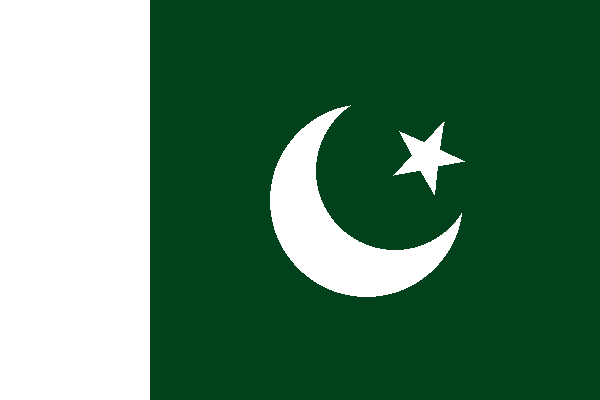 | National flag of Pakistan | White crescent and star on a dark green field, with a vertical white stripe at the hoist |
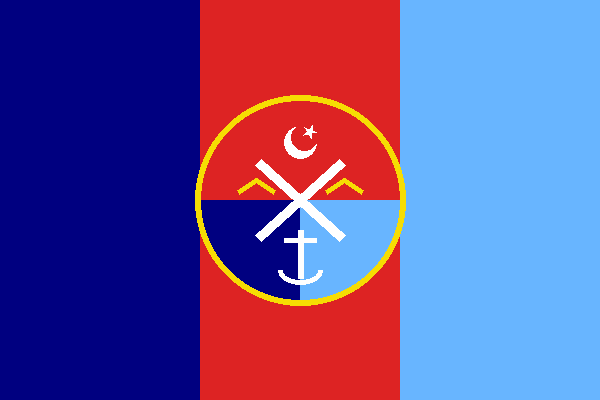 | Flag of the Pakistan Armed Forces | The joint-services flag flown for all three services together |
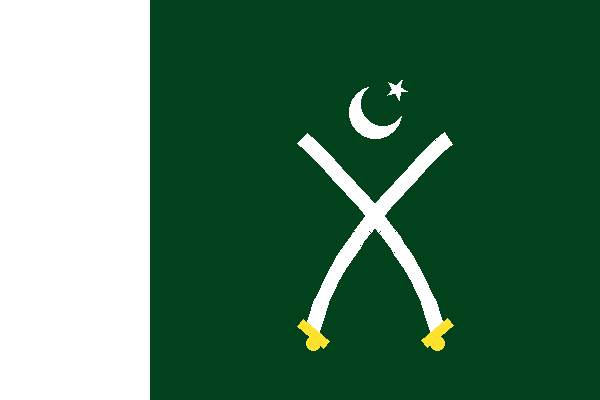 | Flag of the Pakistan Army | The national flag with the Army’s badge in the centre |
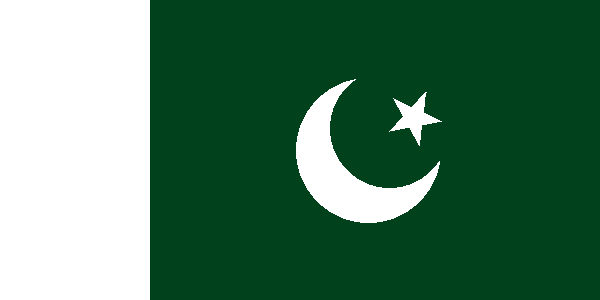 | Ensign of the Pakistan Navy | The national flag, in a longer 1:2 ratio |
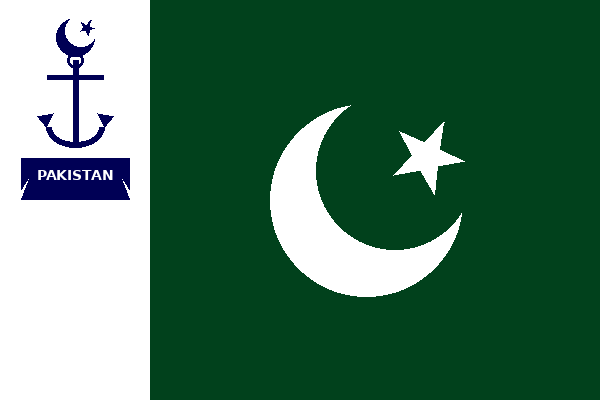 | Standard of the Pakistan Navy | The Navy’s badge on the national flag |
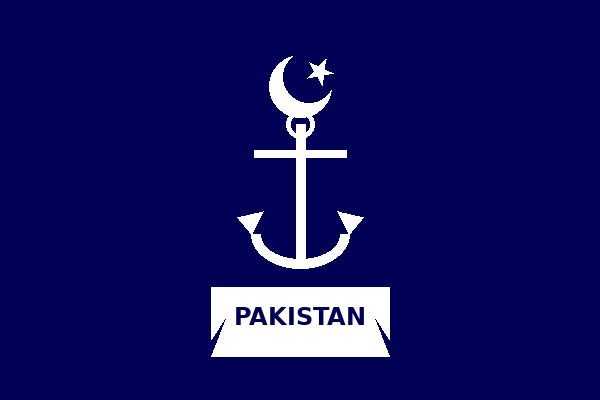 | Naval jack of the Pakistan Navy | The Navy’s badge on a blue field |
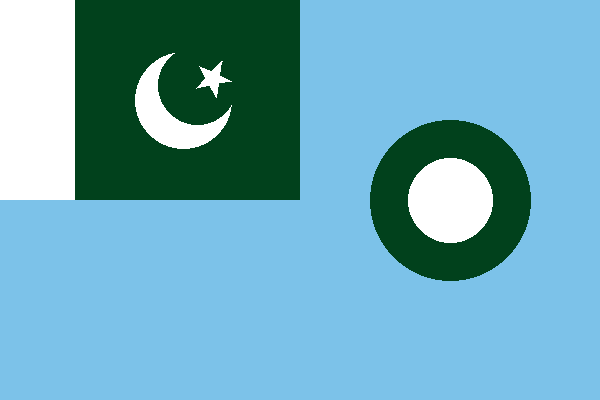 | Ensign of the Pakistan Air Force | A light blue ensign with the national flag in the canton and the Air Force roundel in the fly |
The national flag of Pakistan
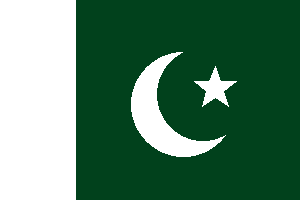
Everything else in this guide starts here. Pakistan’s national flag was adopted on 11 August 1947, three days before independence, by the Constituent Assembly. It was designed by Amiruddin Kidwai, and it grew out of the flag of the All-India Muslim League — the party that had campaigned for a separate Muslim-majority state. The one big change Kidwai’s design made for the national flag was the white stripe.
The design is a dark green field with a white crescent moon and a five-pointed star in the centre, and a vertical white stripe along the hoist — the side nearest the flagpole. Its proportions are 2:3, and the green field takes up about three-quarters of the flag’s length. In Urdu it is called the Parcham-e-Sitara-o-Hilal, the Flag of the Crescent and the Star, a name that also appears in the national anthem.
Each part of the design carries a meaning that Pakistani schoolchildren learn early. The dark green stands for Islam and for the country’s Muslim-majority population. The white stripe stands for Pakistan’s religious minorities — Hindus, Christians, Sikhs, Parsis and others — and for the promise that they belong in the country too. The crescent is read as progress, and the five-pointed star as light and knowledge. Together they are a short statement of what the country was meant to be: an Islamic state that still protects the rights of its minorities.
Did you know? The crescent and star point towards the upper fly corner — the top corner furthest from the flagpole. When the flag is hung vertically, the white stripe goes at the top and the crescent and star point towards the bottom right.
Flag of the Pakistan Armed Forces
When the three services appear together — at a joint parade, a national ceremony or an inter-services event — they march under one joint flag, the flag of the Pakistan Armed Forces. It is the flag of the whole military rather than of any one service, and it sits above the Army, Navy and Air Force flags in the same way the joint chiefs sit above the three service chiefs.
You will see this flag less often than the service flags, because most day-to-day military life happens inside one service, not across all three. But on the big national days — 23 March, 14 August, 6 September — it is the flag that represents the armed forces as a whole.
Flag of the Pakistan Army
The Pakistan Army’s flag is the national flag with the Army’s badge added in the centre. The badge carries the crossed swords and the crescent and star, so the flag reads at a glance as the national flag, marked as the Army’s. It is flown at Army headquarters, at regimental centres and cantonments, and at Army ceremonies — and it is the flag an Army unit carries on parade.
The Army is the largest of the three services and the oldest in its present form, raised at independence in 1947. Its flag follows the pattern used by all three services: take the national flag, add your badge. That shared pattern is exactly why the flags in this guide look so similar — and why the badge, not the colours, is what tells them apart.
Key point: The Chief of the Army Staff has his own flag too — it is the same as the Army flag, except the emblem is surrounded by a wreath. Senior officers’ flags like this are called distinguishing flags, and each service chief has one.
Flags of the Pakistan Navy
The Navy is the only service in this guide with three flags of its own, and each one has a different job. A ship at sea flies the ensign from its stern. A ship in harbour flies the jack from its bow. And on ceremonial occasions the standard comes out. All three are real, current flags — not old designs.
The Naval Ensign
The Naval Ensign of Pakistan is the national flag, flown at sea — with one difference you would only notice with a ruler. It is made in a longer ratio, 1:2, instead of the national flag’s 2:3. That long shape is the naval tradition: ensigns are flown from the stern of a warship, and a longer flag streams better in the wind at sea.
The Naval Standard
The Standard of the Pakistan Navy is the national flag with the Navy’s badge placed on it. It follows the same pattern as the national standards of the other services: the national flag, with the service badge in the upper hoist. It is a ceremonial flag, carried on formal occasions rather than flown from a ship every day.
The Naval Jack
The naval jack is the easiest of the Navy’s flags to recognise, because it breaks the pattern. Instead of the green national flag, it is the Navy’s badge on a plain blue field. A jack is flown from the jackstaff at the bow of a warship when the ship is in harbour or at anchor — never at sea. So if you see a blue flag with the Navy badge at the front of a Pakistani warship in port, that is the jack.
Ensign of the Pakistan Air Force
The Pakistan Air Force ensign is the most colourful flag in this guide, and the only one that does not start from the green national flag. It is a light blue ensign — the pale blue of the sky — with the national flag of Pakistan in the canton, the top corner nearest the flagpole, and the Air Force’s roundel in the fly, the half furthest from the pole. The light blue field and the roundel are what mark it as an air force flag at a distance; the canton is what marks it as Pakistani.
The light blue ensign follows the British tradition — the Royal Air Force’s own ensign is light blue too — and Pakistan kept the pattern after independence. The Pakistan Air Force itself was formed on 15 August 1947 as the Royal Pakistan Air Force and took its present name on 23 March 1956, when Pakistan became a republic. The ensign is flown at PAF bases, on Air Force Day and at air force ceremonies, and the Chief of the Air Staff uses the Air Force ensign itself as his car flag, rather than a separate design.
The flag on the shoulder: uniform patches
Soldiers also wear the flag itself. On the camouflage combat uniform, a small rectangular patch shows the national flag — green field, white stripe, crescent and star — sewn onto the sleeve. It became a standard part of the uniform when the camouflage pattern came in, and it marks the wearer as a Pakistani soldier at a glance.
The flag on aircraft and vehicles
In the air, the flag becomes a roundel. Pakistan Air Force aircraft have carried the same roundel since 1947: a dark green ring around a white disc, painted on the fuselage and wings. The tail carries a square green fin flash with the white crescent and star. On the ground, the flag rides on vehicles too: in parades, tanks and armoured vehicles carry small flags and pennants, and the leading vehicle carries the colours.

The flag Pakistani soldiers serve under: the United Nations
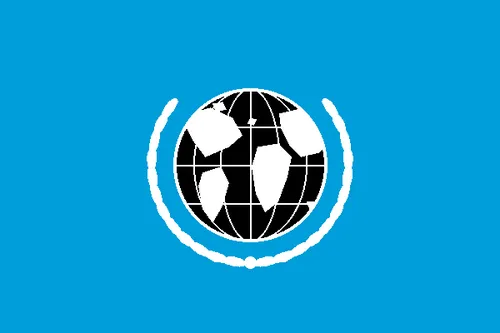
The flag of the United Nations is a light blue field with the UN emblem in white — a world map inside olive branches — adopted in 1947. This one belongs in this guide: Pakistani soldiers have served on UN peacekeeping missions since 1960, and today Pakistan is one of the largest contributors of troops, its peacekeepers wearing the UN patch and the blue beret on mission.
Regimental colours and unit flags
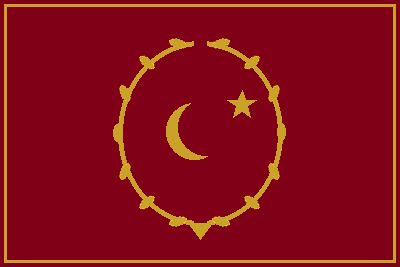
Below the service flags, every part of the Army has a flag of its own. Each of the Army’s six infantry regiments carries a regimental colour — a solid flag with the regimental badge in a wreath and its battle honours, presented in a ceremony and carried on parade. The Punjab Regiment’s colour is green, the Baloch Regiment’s is maroon and the Frontier Force Regiment’s is rifle green. Most units also carry a national standard — the national flag with the unit’s badge in the corner.
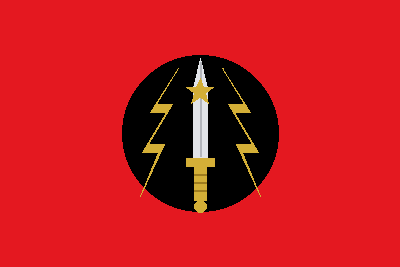
The special forces have one too: the Special Service Group flies a red flag with its dagger, star and lightning-bolt badge in a black disc. Formations have them too — I Corps flies a red, white and red flag with a yellow lightning bolt. Even the Frontier Corps has unit flags, such as the Khyber Rifles’ black, white and light blue tricolour.
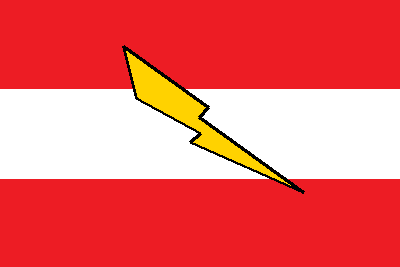
Telling the flags apart
If you remember only one rule, make it this one: look at the badge, not the colours. The national flag, the Army flag and the Naval Standard are all green-and-white, and they differ only in the badge in the middle. The Naval Ensign looks exactly like the national flag until you measure it. The two flags that stand out at a distance are the ones that break the green pattern — the Navy’s blue jack and the Air Force’s light blue ensign.
There is also one newer flag worth knowing about. The list of Pakistani flags records a standard of the chief of defence forces, dated 2025, with a fringe in green, white, red, yellow, dark blue and light blue — the colours of all the services mixed together. It belongs to the newest senior command in the country, and it shows the same idea as everything else in this guide: in Pakistan, a flag says which service — or which combination of services — it belongs to.
Read next
Pakistan Army Ranks — from Lowest to Highest — every Army rank, its insignia and what each rank does.
Frequently asked questions
What is Pakistan’s military flag?
There is no single one. Pakistan has a national flag, a joint Armed Forces flag, and separate flags for the Army, Navy and Air Force. The Army flag is the national flag with the Army badge, the Navy has an ensign, a standard and a jack, and the Air Force has a light blue ensign.
Is the Pakistan Navy ensign different from the national flag?
Yes, but only in shape. The Naval Ensign is the national flag made in a longer ratio — 1:2 instead of 2:3. It is flown from the stern of Pakistani warships at sea.
What does the Pakistan Air Force ensign look like?
It is a light blue flag with the national flag of Pakistan in the top corner nearest the pole and the Pakistan Air Force roundel in the other half. The light blue stands for the sky, and the pattern follows the British RAF tradition.
How is the Pakistan Army flag different from the national flag?
The Army flag takes the national flag and adds the Army’s badge — crossed swords with the crescent and star — in the centre. Without the badge it would be the national flag.
What is a naval jack, and when is it flown?
A jack is a small flag flown from the bow of a warship, and only when the ship is in harbour or at anchor. Pakistan’s naval jack is the Navy’s badge on a blue field. At sea, a warship flies the ensign from its stern instead.
What do the green and white on Pakistan’s flag mean?
The dark green stands for Islam and the Muslim-majority population, the white stripe stands for the country’s religious minorities, the crescent stands for progress and the five-pointed star stands for light and knowledge.
Facts are paraphrased in our own words; sources: List of Pakistani flags and Flag of Pakistan, and Flags of the World (FOTW) for the Pakistan Armed Forces pages.