
The Royal Navy — the “Senior Service” of the British Armed Forces — traces its origins to the 16th century and remains one of the world’s most storied navies. Its rank system is the template from which dozens of Commonwealth navies, from Pakistan to Australia to Nigeria, derived their own: gold sleeve stripes, the famous executive curl, and the anchor-and-crown badges of the ratings. This complete 2026 guide lists every Royal Navy rank in order, shows its insignia (including the post-2023 Tudor Crown designs), and explains the officer and rating career paths, how to read the sleeve stripes, and answers to the most common questions.
The Royal Navy divides its people into two great groups: commissioned officers, who train at the Britannia Royal Naval College in Dartmouth and hold the King’s commission, and ratings — the other ranks, from Able Rate to Warrant Officer — who form the skilled workforce of every ship, submarine, and shore establishment. Below are the full rank tables for both, followed by guides to promotion, insignia, and the historic curl.
Commissioned Officer Ranks of the Royal Navy
Officer cadets join through the Britannia Royal Naval College (BRNC) at Dartmouth, completing around 30 weeks of initial officer training before going to sea as Midshipmen. Officers then climb ten ranks to Admiral — the four-star rank held by the First Sea Lord, the professional head of the Royal Navy. The table below lists every commissioned rank from lowest to highest, with its sleeve insignia, NATO code, and notes on typical roles.
| Insignia | Rank | NATO Code | Details |
|---|---|---|---|
| White turnback patch on the collar — no dedicated sleeve insignia file | Midshipman | OF-1 | Officer under training at BRNC Dartmouth and during initial sea time; wears the distinctive white “turnback” collar patch. |
 | Sub Lieutenant | OF-1 | First commissioned rank after passing out; serves as a junior officer of the watch aboard ship. |
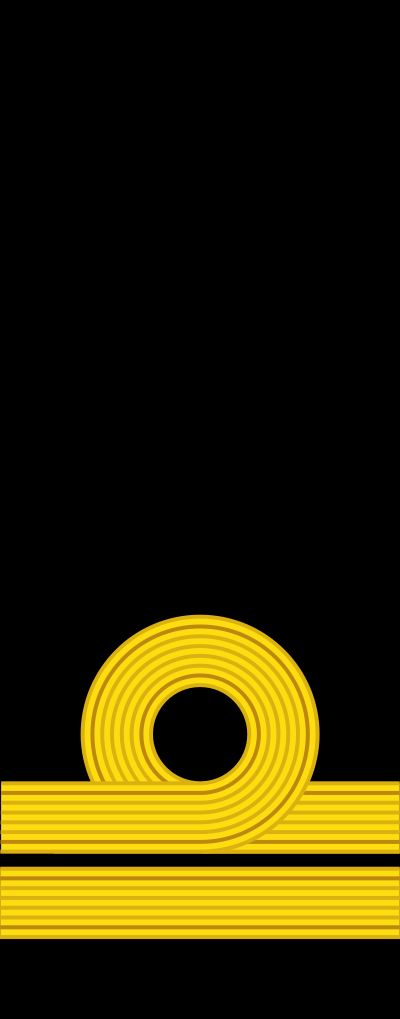 | Lieutenant | OF-2 | Typically reached within a few years; takes charge of a department or stands senior watches. |
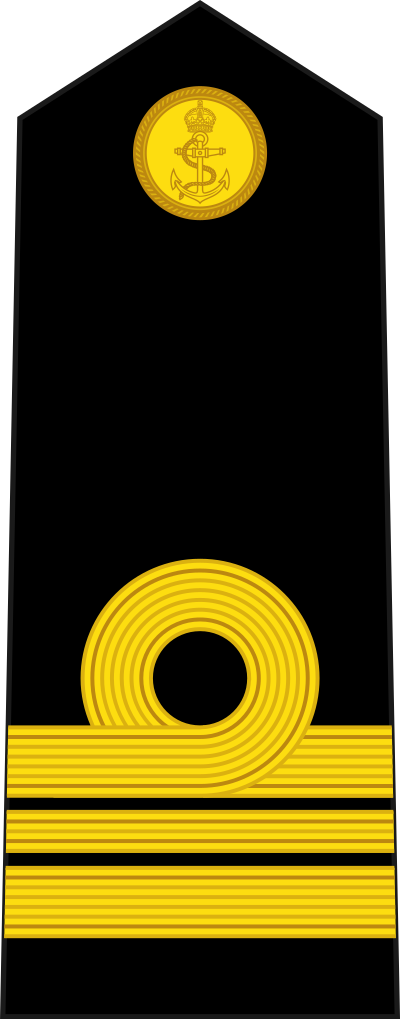 | Lieutenant Commander | OF-3 | Senior lieutenant rank; often the executive officer (second-in-command) of a smaller warship. |
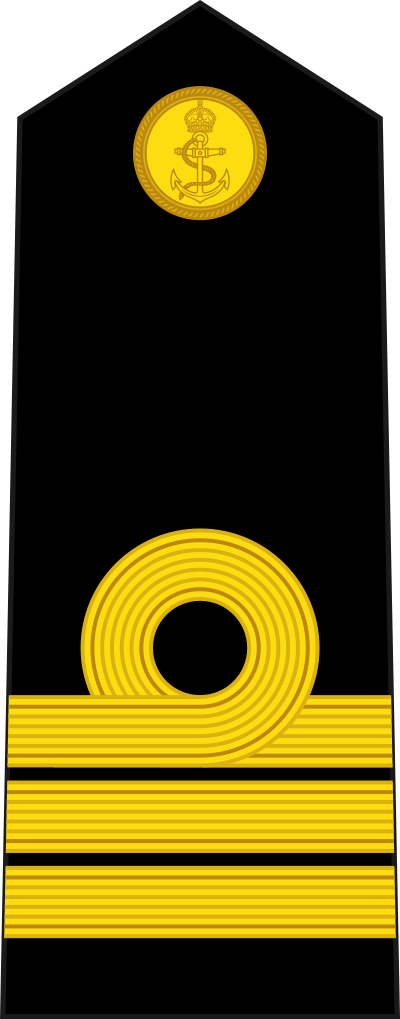 | Commander | OF-4 | Commands frigates, destroyers, and submarines; also holds senior staff appointments ashore. |
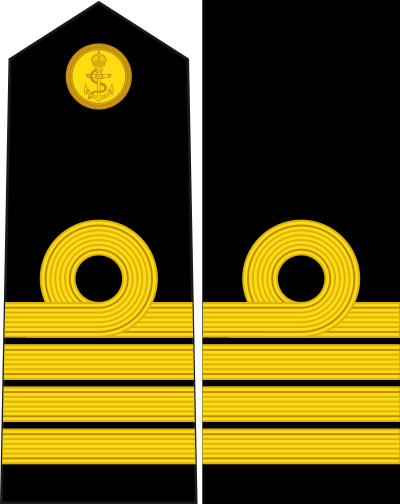 | Captain | OF-5 | Commands major warships such as aircraft carriers and large shore establishments. |
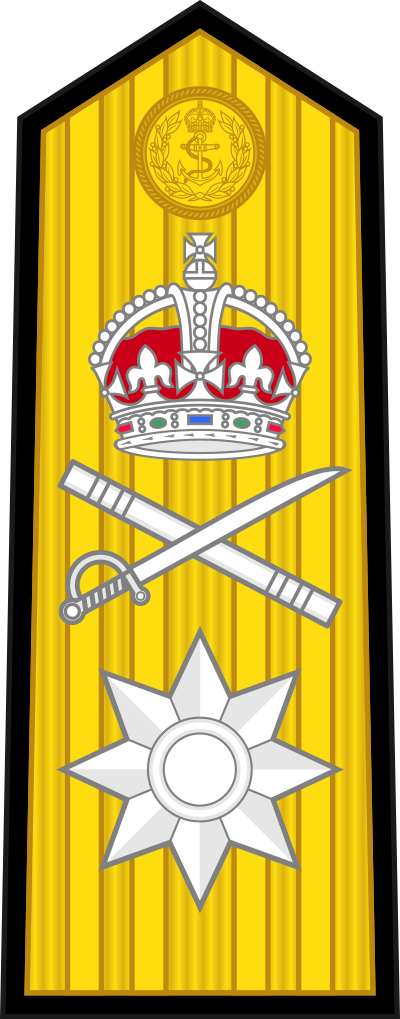 | Commodore | OF-6 | One-star rank commanding a flotilla or squadron of ships, or a major naval base. |
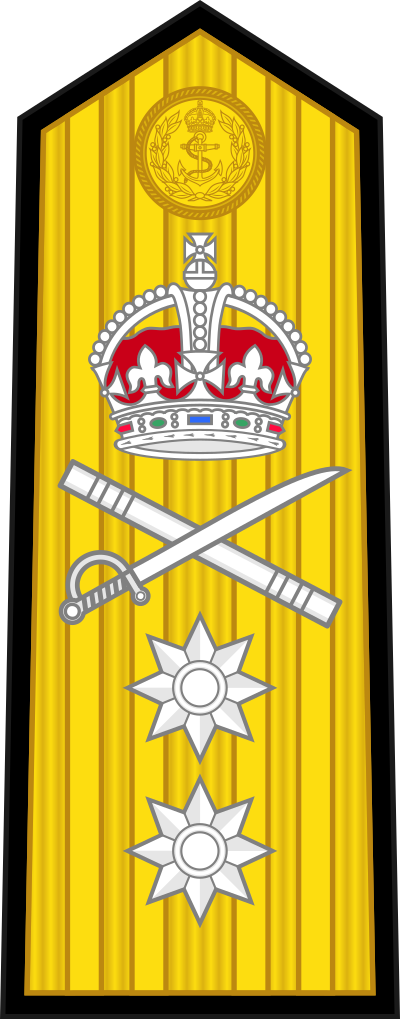 | Rear Admiral | OF-7 | Two-star rank holding senior operational commands and Ministry of Defence appointments. |
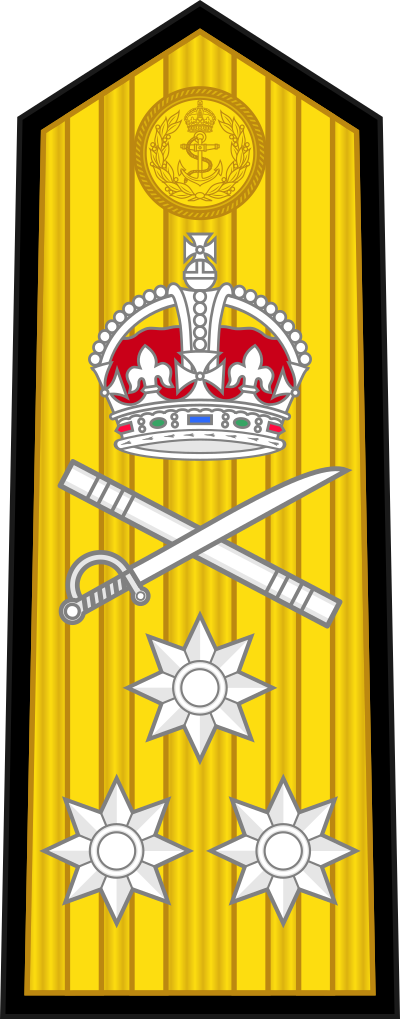 | Vice Admiral | OF-8 | Three-star rank; the Fleet Commander and other top operational leaders are Vice Admirals. |
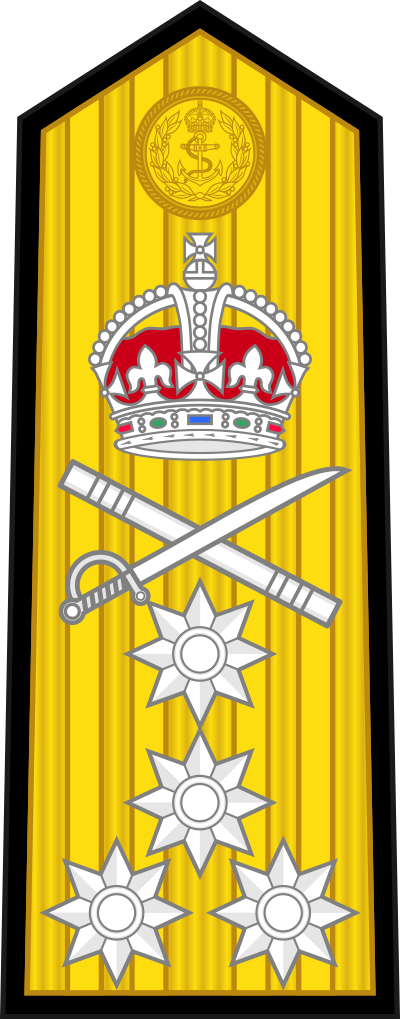 | Admiral | OF-9 | Highest active rank, held by the First Sea Lord and Chief of the Naval Staff. |
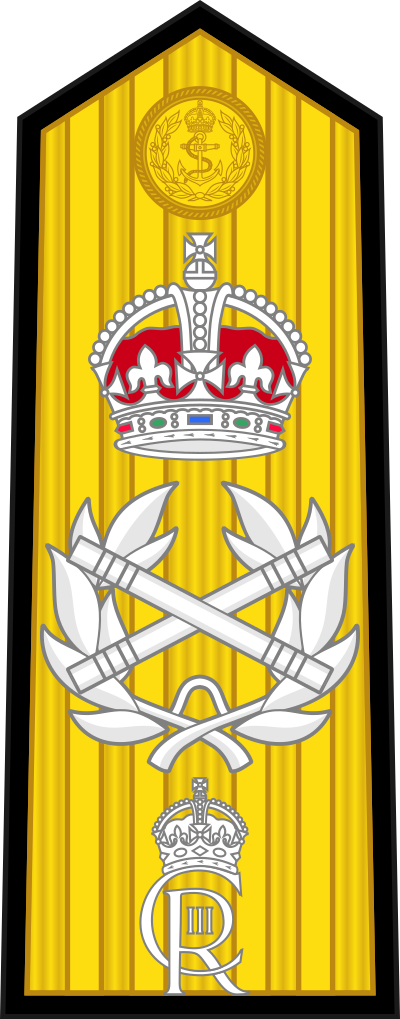 Admiral of the Fleet is the honorary five-star rank (OF-10) of the Royal Navy, now awarded only as a ceremonial distinction. Its insignia carries the broadest bands of all. The Royal Navy also originated the executive curl — the loop at the top of an officer’s uppermost sleeve stripe (nicknamed “Elliott’s eye”) — which marks the seaman/officer branch and has been copied by navies worldwide.
Ratings of the Royal Navy
Ratings are the Royal Navy’s other ranks — the sailors who operate the ships’ weapons, engines, sensors, and aircraft. Recruits join through HMS Raleigh in Cornwall, completing ten weeks of basic training before specialising in branches such as warfare, engineering, logistics, or medical. The junior-most rating, Able Rate, wears no rank insignia; from Leading Hand upward, ratings wear distinctive badges on the sleeve, rising through Petty Officer and Chief Petty Officer to the two Warrant Officer grades.
| Insignia | Rank | NATO Code | Details |
|---|---|---|---|
| No insignia | Able Rate (AB) | OR-2 | Trained sailor qualified in a naval branch; the foundation rank of the lower deck. |
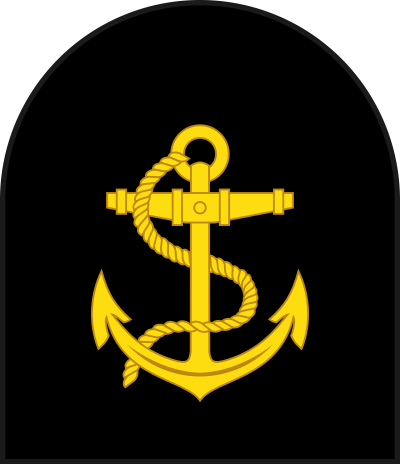 | Leading Hand | OR-4 | First supervisory rating rank, wearing a single fouled-anchor badge; leads a small team. |
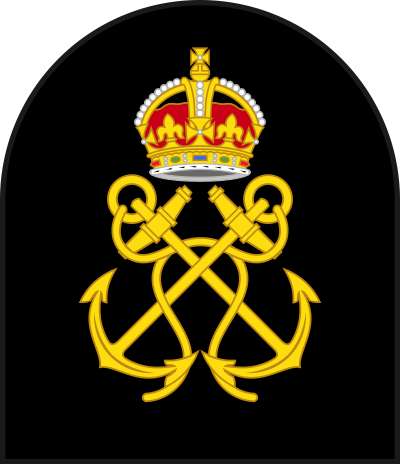 | Petty Officer (PO) | OR-6 | Wears the crown-and-anchor badge; leads a division or department section. |
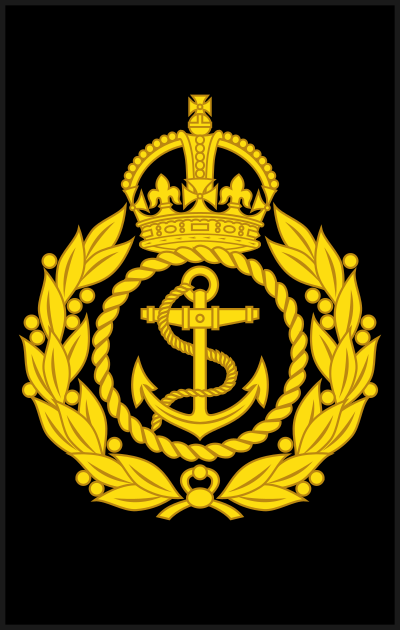 | Chief Petty Officer (CPO) | OR-7 | Senior rating and the technical backbone of a ship’s company; addressed as “Chief”. |
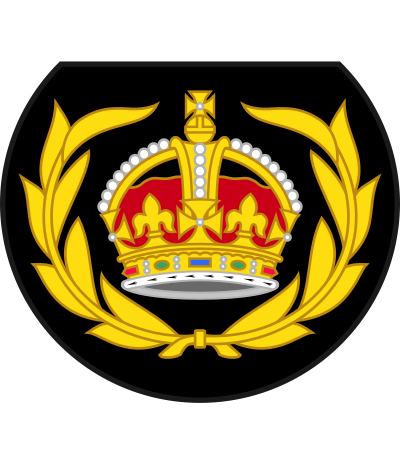 | Warrant Officer 2 (WO2) | OR-8 | Senior leadership rank, often the departmental warrant officer advising junior officers. |
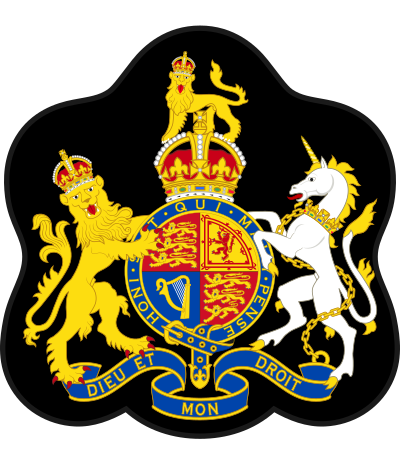 | Warrant Officer 1 (WO1) | OR-9 | Highest rating rank; the Warrant Officer of the Naval Service advises the Navy Board on the lower deck. |
Officers vs Ratings: Two Routes into the Royal Navy
The officer and rating routes differ in entry, training, and authority. Officers join as officer cadets — typically after A-levels or a degree — and train at BRNC Dartmouth, where the 30-week initial course covers leadership, navigation, seamanship, and military skills. On passing out they hold the King’s commission and are destined for command: of a ship, a squadron, and ultimately the Navy itself.
Ratings join from age 16 upward through the standard recruiting process, train at HMS Raleigh, and build deep specialist expertise in their branch. A rating’s career can reach Warrant Officer 1 — but it does not have to stop there. The Upper Yardman scheme selects exceptional ratings for officer training at Dartmouth, commissioning them as officers; it is one of the most respected routes in the service, and many senior officers began their careers on the lower deck. Direct Graduate Entry and the Royal Naval Reserve offer further paths for specialists.
How to Read Sleeve Stripes and the Executive Curl
Royal Navy officer rank is read from the gold stripes on the dark navy sleeve of the dress uniform. The system is beautifully simple: one stripe for Sub Lieutenant, two for Lieutenant, two-and-a-half for Lieutenant Commander, three for Commander, and four for Captain — with flag officers wearing progressively broader bands topped by stars and crossed sword-and-baton devices. The topmost stripe of a warfare (executive) officer carries the executive curl, a loop in the braid said to date from the 19th century, which distinguishes the seaman branch and has been adopted by navies across the Commonwealth.
Ratings’ badges tell their own story: the fouled anchor of the Leading Hand, the crown-and-anchor of the Petty Officer, and the royal coat of arms worn by Warrant Officers. One important modern detail: since the accession of King Charles III in 2022, new insignia has been produced with the Tudor Crown in place of St Edward’s Crown — so badges issued from 2023 onward carry the Tudor Crown, a change collectors and serving personnel alike now look for.
Frequently Asked Questions
What is the highest rank in the Royal Navy?
The highest active rank is Admiral, held by the First Sea Lord and Chief of the Naval Staff. Above it sits the honorary five-star rank of Admiral of the Fleet, awarded only as a ceremonial distinction.
How long does it take to become a Lieutenant in the Royal Navy?
Typically around three years after passing out of BRNC Dartmouth as a Sub Lieutenant, subject to completing the required sea time, professional courses, and watchkeeping qualifications.
Can a rating become an officer in the Royal Navy?
Yes — through the Upper Yardman scheme, which selects outstanding ratings for officer training at Britannia Royal Naval College, Dartmouth. Many senior officers began their careers as ratings.
What is the executive curl?
The executive curl (nicknamed “Elliott’s eye”) is the loop at the top of an officer’s uppermost sleeve stripe, originating in the Royal Navy in the 19th century. It marks the warfare/executive branch and has been copied by navies around the world.
Who leads the Royal Navy?
The professional head is the First Sea Lord and Chief of the Naval Staff, a four-star Admiral based at the Ministry of Defence in London, responsible to the Defence Council for the fighting effectiveness of the Navy.
Image credits: Rank insignia images: officer sleeve stripes by Sodacan and ratings by Dgp4004, via Wikimedia Commons under CC BY-SA 4.0.