
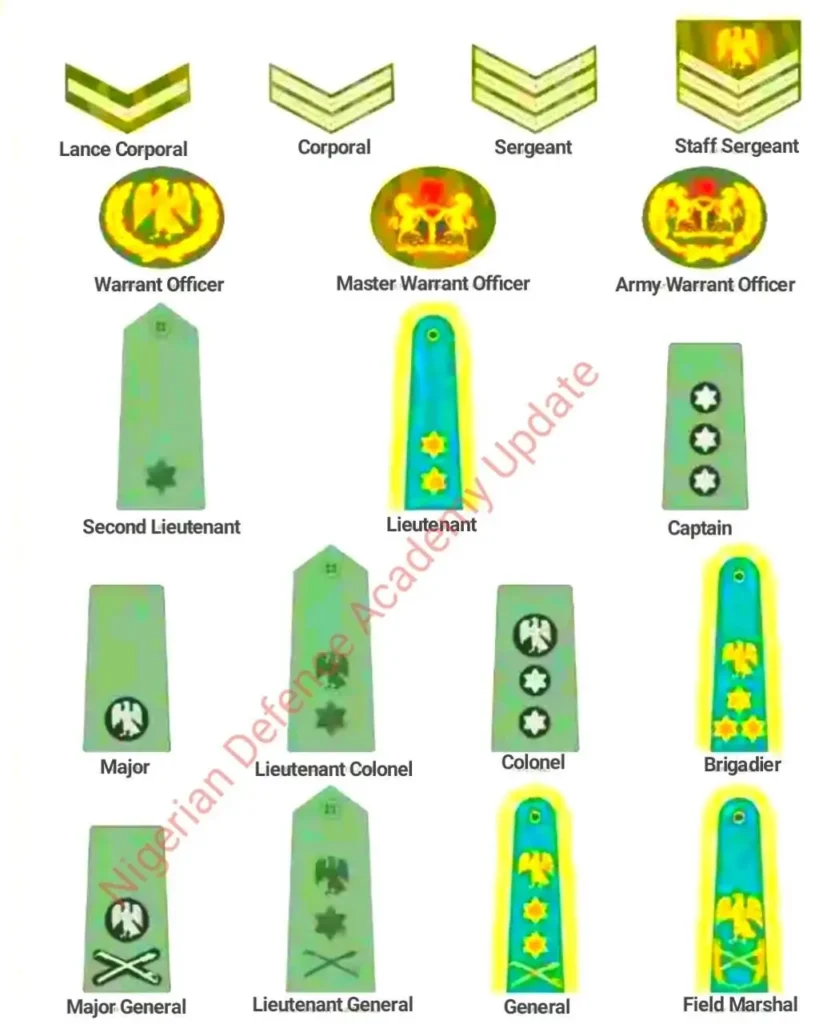
he Nigerian Army rank system is used to maintain discipline, leadership, and a clear chain of command within the military. It consists of Non-Commissioned Officer (NCO) ranks and Commissioned Officer ranks, ranging from Lance Corporal to Field Marshal. Each rank has specific duties and responsibilities that help the Army operate effectively. Understanding Nigerian Army ranks is useful for military enthusiasts, students, researchers, and individuals interested in joining the Nigerian Army.
Nigerian Army Ranks and Insignia Explained
The Nigerian Army is the largest branch of the Nigerian Armed Forces and plays a vital role in defending the country, maintaining peace, and supporting national security operations. The rank structure of the Nigerian Army is divided into two major categories: Non-Commissioned Officers (NCOs) and Commissioned Officers. Each rank carries different levels of authority, responsibility, and leadership duties.
Overview of Nigerian Army Rank Structure
The Nigerian Army rank system follows a hierarchical chain of command that ensures discipline, organization, and effective military operations. Soldiers progress through ranks based on experience, performance, training, and leadership abilities.
Non-Commissioned Officer (NCO) Ranks
Non-Commissioned Officers are experienced soldiers responsible for leading troops, maintaining discipline, and carrying out military operations at the unit level.
| Rank | Category | Main Responsibility |
|---|---|---|
| Lance Corporal | NCO | Junior leadership and supervision of soldiers. |
| Corporal | NCO | Leads small teams and supports unit operations. |
| Sergeant | NCO | Responsible for training and discipline of troops. |
| Staff Sergeant | Senior NCO | Provides leadership and administrative support. |
| Warrant Officer | Senior NCO | Experienced military leader and advisor. |
| Master Warrant Officer | Senior NCO | Senior advisor with extensive operational experience. |
| Army Warrant Officer | Highest NCO Rank | Highest enlisted advisor in the Nigerian Army. |
Commissioned Officer Ranks
Commissioned Officers are responsible for planning, commanding, and leading military units ranging from platoons to entire formations.
| Rank | Officer Level | Typical Responsibility |
|---|---|---|
| Second Lieutenant | Junior Officer | Commands a platoon and begins officer leadership duties. |
| Lieutenant | Junior Officer | Assists in command and operational planning. |
| Captain | Company Officer | Commands a company-sized unit. |
| Major | Field Officer | Staff planning and operational management. |
| Lieutenant Colonel | Field Officer | Typically commands a battalion. |
| Colonel | Senior Field Officer | Commands large units and formations. |
| Brigadier | General Officer | Commands brigades and major military formations. |
| Major General | General Officer | Leads divisions and major operational commands. |
| Lieutenant General | Senior General Officer | Commands corps-level formations and strategic operations. |
| General | Highest Active Rank | Senior military leadership and command. |
| Field Marshal | Honorary Rank | Highest ceremonial military rank awarded under exceptional circumstances. |
Highest Rank in the Nigerian Army
Field Marshal is the highest rank shown in the Nigerian Army rank structure. However, the highest active-duty rank generally held by serving officers is General. Officers reaching this level are responsible for strategic military leadership and national defense planning.
Importance of Army Ranks
- Establishes a clear chain of command.
- Defines authority and leadership responsibilities.
- Maintains military discipline and professionalism.
- Ensures efficient communication during operations.
- Provides career progression opportunities for soldiers and officers.
Promotion in the Nigerian Army
Promotions in the Nigerian Army are based on factors such as years of service, professional military education, performance evaluations, leadership qualities, and operational experience. Higher ranks require greater responsibility and command capabilities.
Conclusion
The Nigerian Army rank system is designed to create an organized and effective military force. From Lance Corporal to Field Marshal, each rank represents a specific level of authority, responsibility, and leadership. Understanding these ranks helps military enthusiasts, researchers, and aspiring soldiers gain valuable insight into the structure and functioning of the Nigerian Army.
Frequently Asked Questions (FAQs)
1. What is the highest rank in the Nigerian Army?
Field Marshal is the highest rank in the Nigerian Army rank structure, while General is typically the highest active-duty rank.
2. How many categories of ranks are there in the Nigerian Army?
The Nigerian Army rank system is mainly divided into Non-Commissioned Officer (NCO) ranks and Commissioned Officer ranks.
3. What rank comes after Captain in the Nigerian Army?
Major is the next rank after Captain in the Nigerian Army officer hierarchy.
4. What is the role of a Lieutenant Colonel?
A Lieutenant Colonel usually commands a battalion and manages operational planning and leadership duties.
5. Why are military ranks important?
Military ranks establish leadership, define responsibilities, maintain discipline, and ensure effective command during operations.
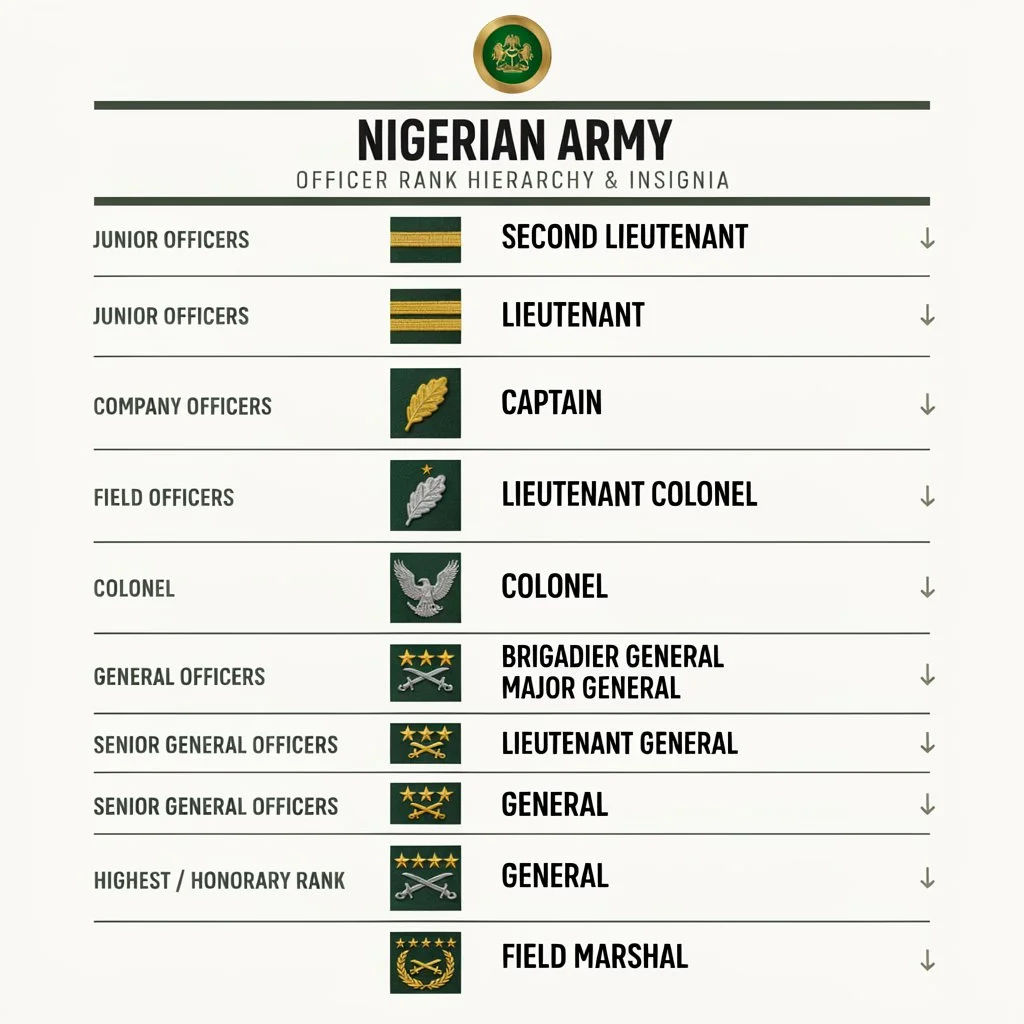
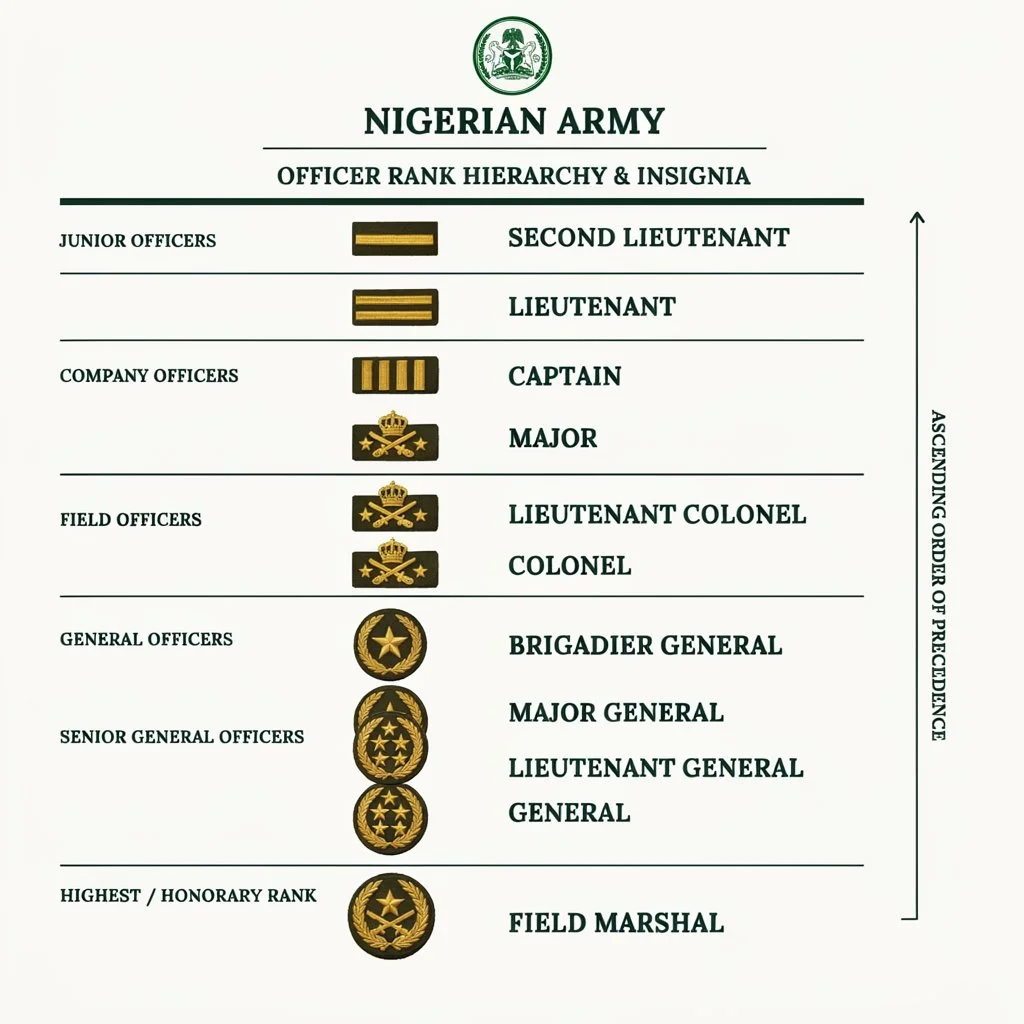
nigerian army ranks and logo (Ranks Insignia)
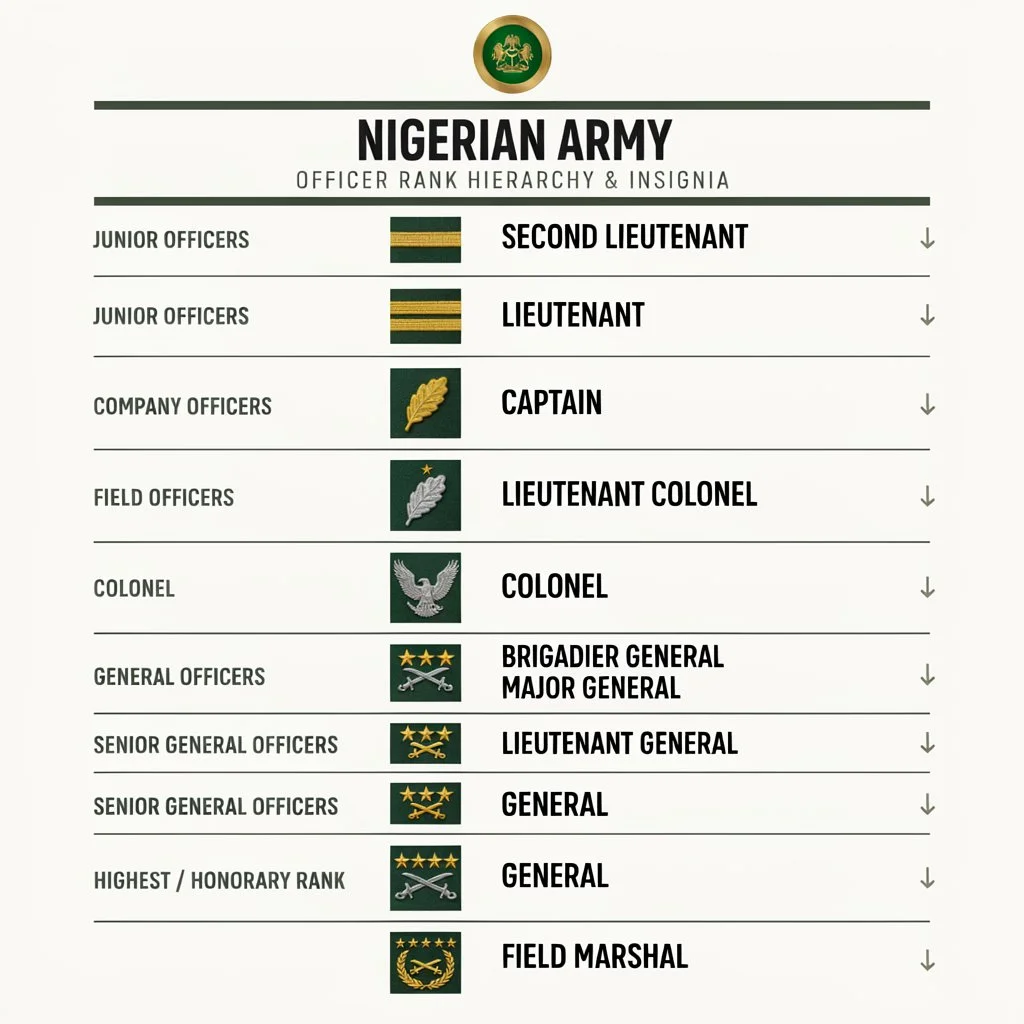
nigerian army ranks and salaries Structure (Chart Table)
Non-commissioned officers start as recruits and may rise through ranks like private soldier, corporal, sergeant, and master sergeant, with moderate salaries consistent with entry-level military roles.Commissioned officers undergo formal military education and hold leadership roles commanding platoons, companies, battalions, and brigades. Salary figures are listed in Nigerian Naira (NRA) and highlight disparities across ranks, from about 173,000 NRA at entry-level commissioned ranks to over 1.7 million NRA for the four-star genera
| Rank | Monthly Salary |
|---|---|
| Second Lieutenant | ₦173,000–₦187,000 |
| Lieutenant | — |
| Captain | — |
| Major | — |
| Lieutenant Colonel | — |
| Colonel | — |
| Brigadier General | — |
| Major General | — |
| Lieutenant General | — |
| General | Over ₦1.7 million |
| Field Marshal | No current salary data |
4 thoughts on “Nigerian Army Ranks (officers & Soldiers)”