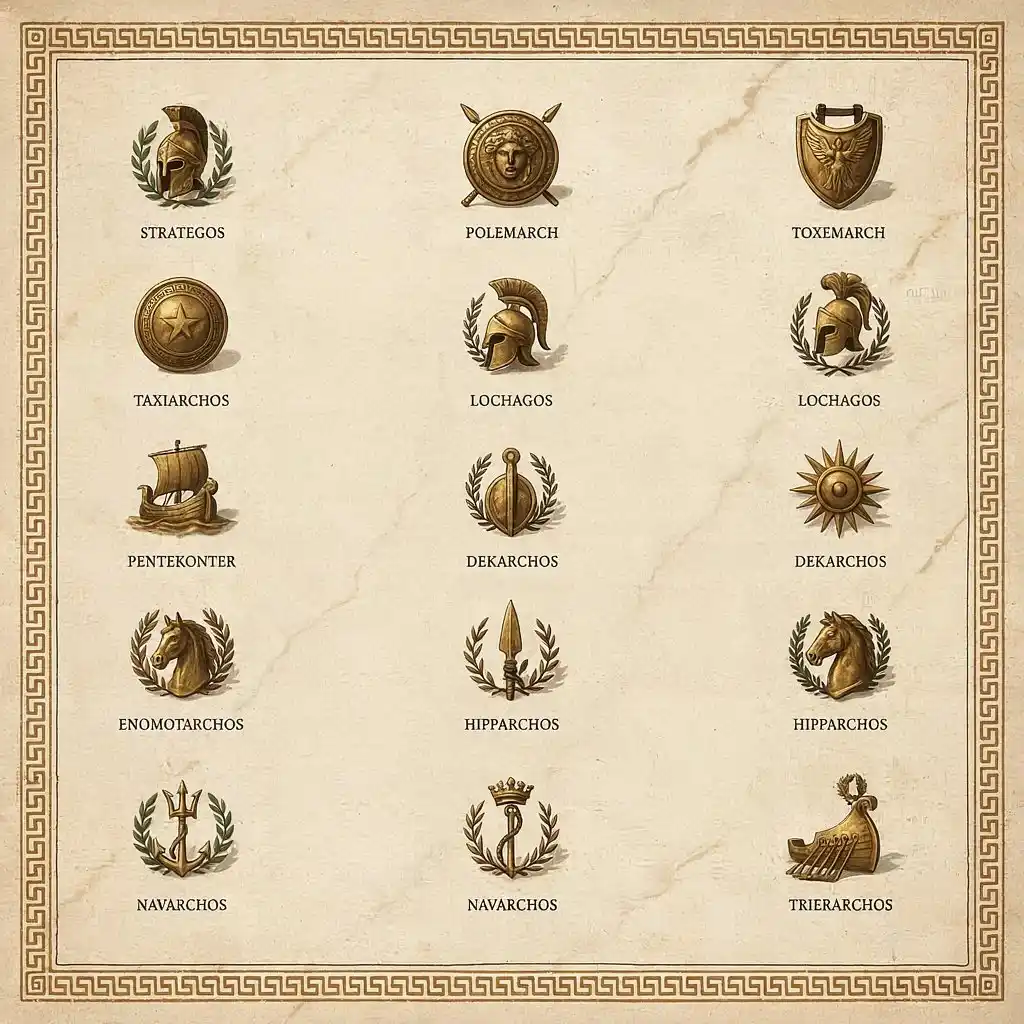
Complete Detail of the Ancient Greek Military Ranks along with Rank Insignias and List. Role and duty of the every individual ranks of the Greek Military is also explained briefly. High Resolution Ranks Insignias of the oldest Civilization ever inn the History with the most disciplined and strongest Military of its time. Still Students are curious about the informationn related to the Ancient Greek Military History and Civilization.
The Hierarchy of the Greek Military Ranks will help the students not the understand the Military Structure easily but also a way to understand the History of Greeks. Greek Army was one of the most civilized and structured forces. They were always ready to defend their people and face any combbat missions.
Who were the Ancient Greeks?
Ancient Greeks were one of the most influential and old civilization. They were not like a single united nation but has many cities and states with its own Military and Government structures. They made many contributions in the field of Politics, Knowledge, Mathematics, literature and Democracy. Sparta is the State most famous for Military and warrior culture.
List of the Ancient Greek Military Ranks
- Strategos
- Polemarch
- Taxiarchos
- Lochagos
- Pentekonter
- Dekarchos
- Enomotarchos
- Hipparchos
- Navarchos
- Trierarchos
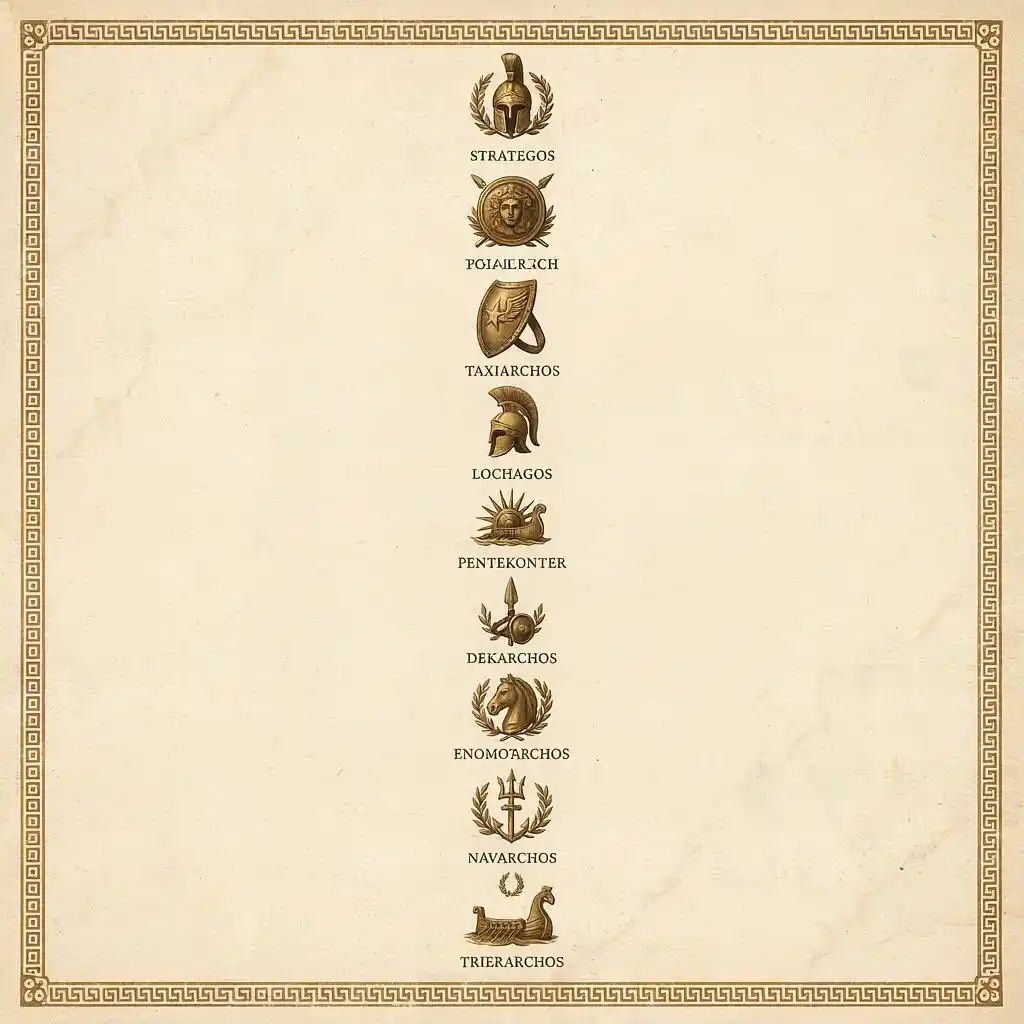
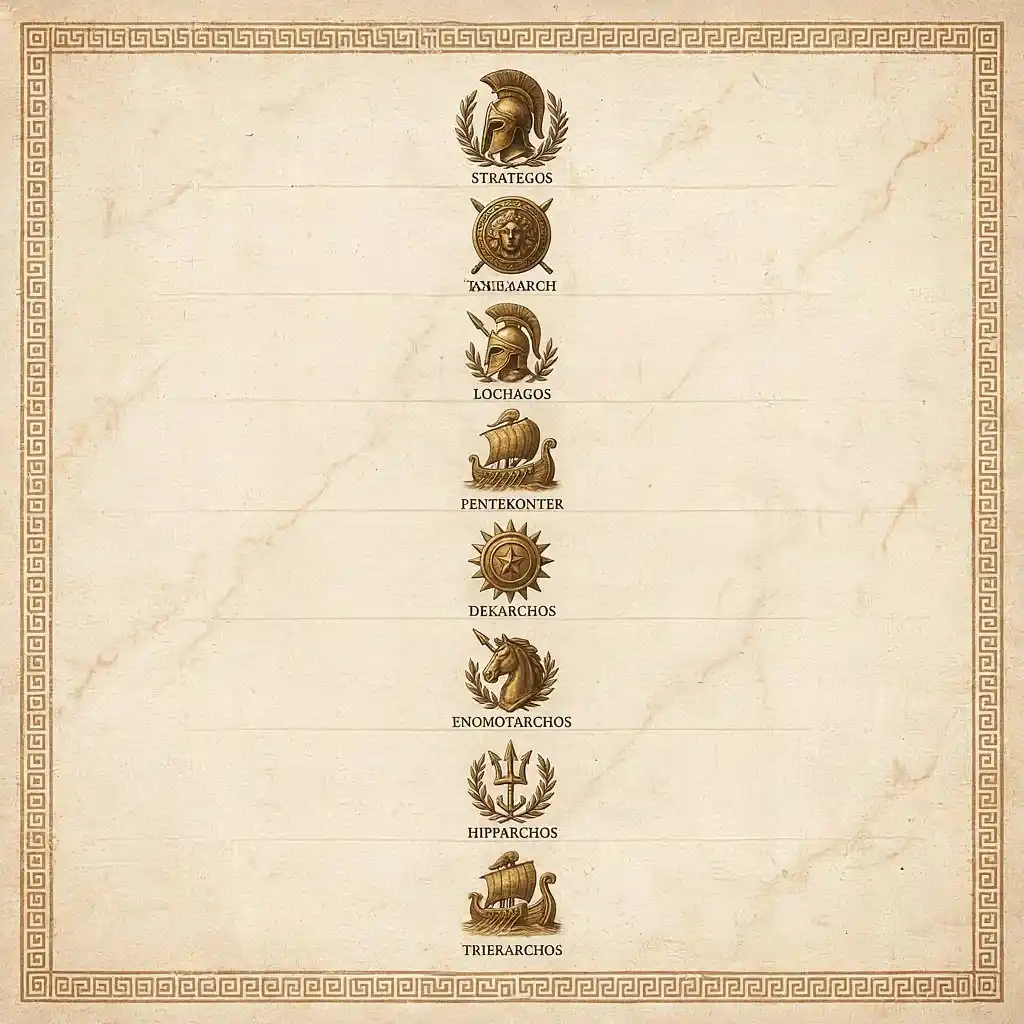
Ancient Greek Military Ranks and Their Role and Duty & Insignias
Strategos
The strategos was the highest military commander in many ancient Greek city-states. In places like Athens, several strategoi were elected each year, and they directed overall war plans, troop movements, and major decisions in battle. They were not just battlefield leaders, but also political figures, often involved in planning campaigns and managing resources. Their authority came from the state itself, which made the role [music] both powerful and closely watched by citizens.
Polemarch
The polemarch originally served as a chief war leader, especially in earlier periods of Greek history. In Athens, this role once stood at the top of military command before being gradually replaced in importance by the strategoi. Over time, the polemarch’s duties became more ceremonial and administrative, but in earlier warfare, the position held real authority over troops and military decisions.
Taxiarchos
The taxiarchos commanded a large infantry division known as a taxis. This officer organized formations, directed movement in battle, and ensured soldiers maintained discipline within their unit. The role required both tactical awareness and strong control over large groups of hoplites, making the taxiarchos essential for keeping the battle line steady and effective.
Lochagos
Lochagos. The lochagos led a lochos, a smaller unit within the larger army formation. This officer worked closely with soldiers on the ground, guiding them in formation and maintaining order during combat. Because the lochos was small enough for direct control, the lochagos often had a personal connection with the men under his command and played a key role in immediate battlefield action.
Pentekonter
The pentekonter commanded a group of around 50 men. This mid-level officer bridged the gap between small squad leadership and larger unit command. The position demanded reliability and clear communication since orders from higher commanders had to be passed down quickly and accurately to the soldiers in formation.
Dekarchos
The Dekarchos led a group of 10 [music]
soldiers. This was a close-range leadership role focused on coordination, discipline, and readiness within a very small unit. Because the Dekarchos worked [music] directly alongside the men, he was responsible for keeping them prepared, aligned in formation, and responsive during the chaos of [music] battle.
Strategos
The Enomotarchos was a Spartan officer who commanded an enomotia, one of the smallest formal units in the Spartan army. Sparta placed great importance on structure and unity, and this leader ensured his group moved and fought as a single body. The role reflected the Spartan focus on precision and discipline at every level of the army.
Hipparchos
The Hipparchos commanded cavalry forces. Unlike infantry officers, this leader directed mounted soldiers, managing speed, positioning, and timing in open terrain. Cavalry played a different role in battle, often used for flanking, scouting, or [music] pursuit. So, the Hipparchos needed a strong sense of movement and coordination beyond the tight formations of foot [music] soldiers.
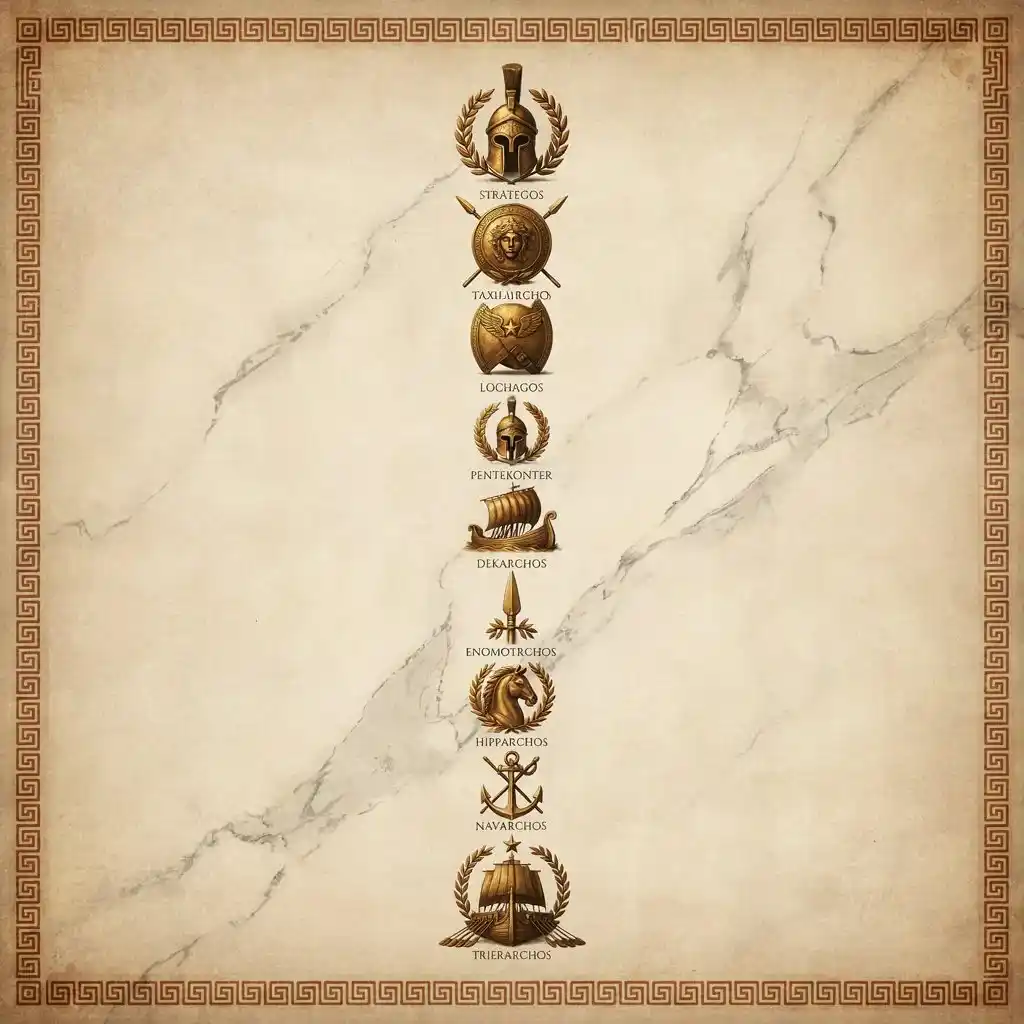
Navarchos
Navarchos The Navarchos served as the commander of a fleet. In naval warfare, which was vital for many Greek city-states, this officer controlled ships, coordinated sea battles, and directed maritime strategy. The Navarchos held immense responsibility, especially for naval powers that depended on sea control for trade, defense, and expansion. Trierarchos The trierarchos commanded a single warship, most commonly a trireme. This leader oversaw the crew, maintained the vessel, and directed its actions during naval combat. In some city-states, wealthy citizens took on this role as both a duty and an honor, funding the ship’s upkeep while leading it in the battle.
Key Points from The Article
- The strategos was the top military commander and also a key political figure in Greek city-states like Athens.
- The polemarch originally led armies but later took on mostly ceremonial roles.
- The taxiarchos commanded large infantry divisions called taxis, controlling formations and discipline.
- The lochagos led smaller infantry units, maintaining direct control and close relationships with soldiers.
- The hipparchos was the cavalry commander, focusing on speed, positioning, and flanking tactics.
- The navarchos commanded entire fleets, crucial for maritime dominance and naval warfare.
- The trierarchos led individual warships (triremes) and sometimes personally funded and maintained these vessels.
1 thought on “Ancient Greek Military Ranks”