Here is all the Complete Detail of all the Chinese Military Ranks and Insignias with mentioned their roles and duties. All Information of all the ranks of the People’s Liberatiion Army of China. List of the Ranks with images showes the Hierarchy of the ranks in sequence.
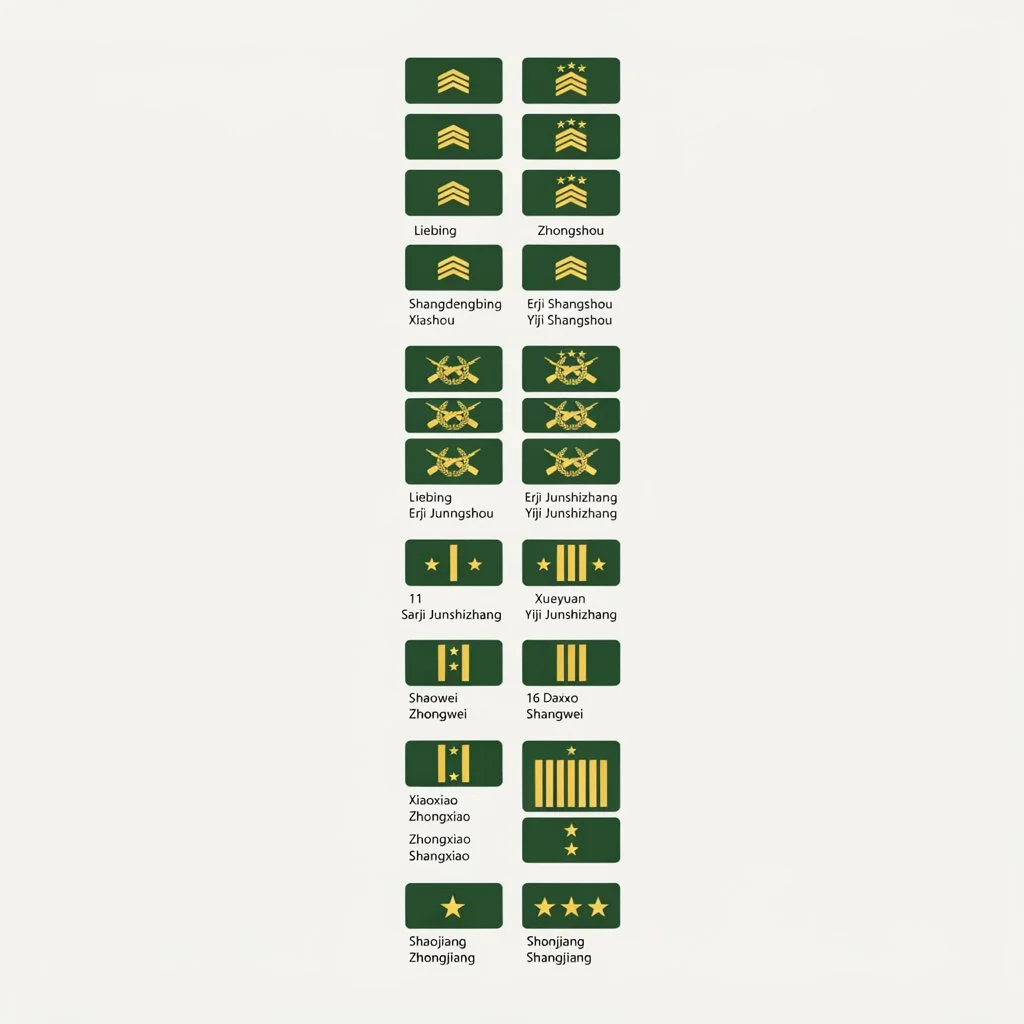
Ranks Insignias of the People Liberation Army - Chinese Military Ranks
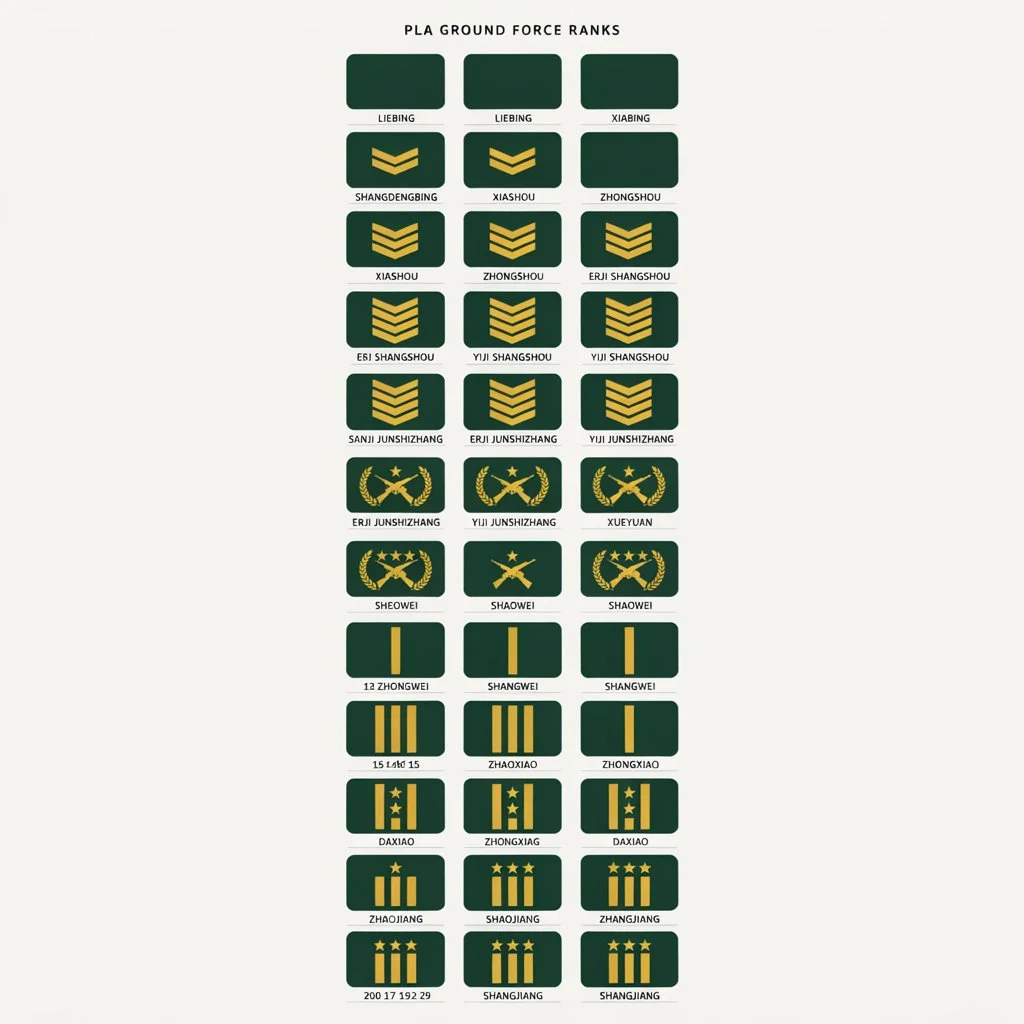
People's Liberation Army Ground Force Rank Hierarchy
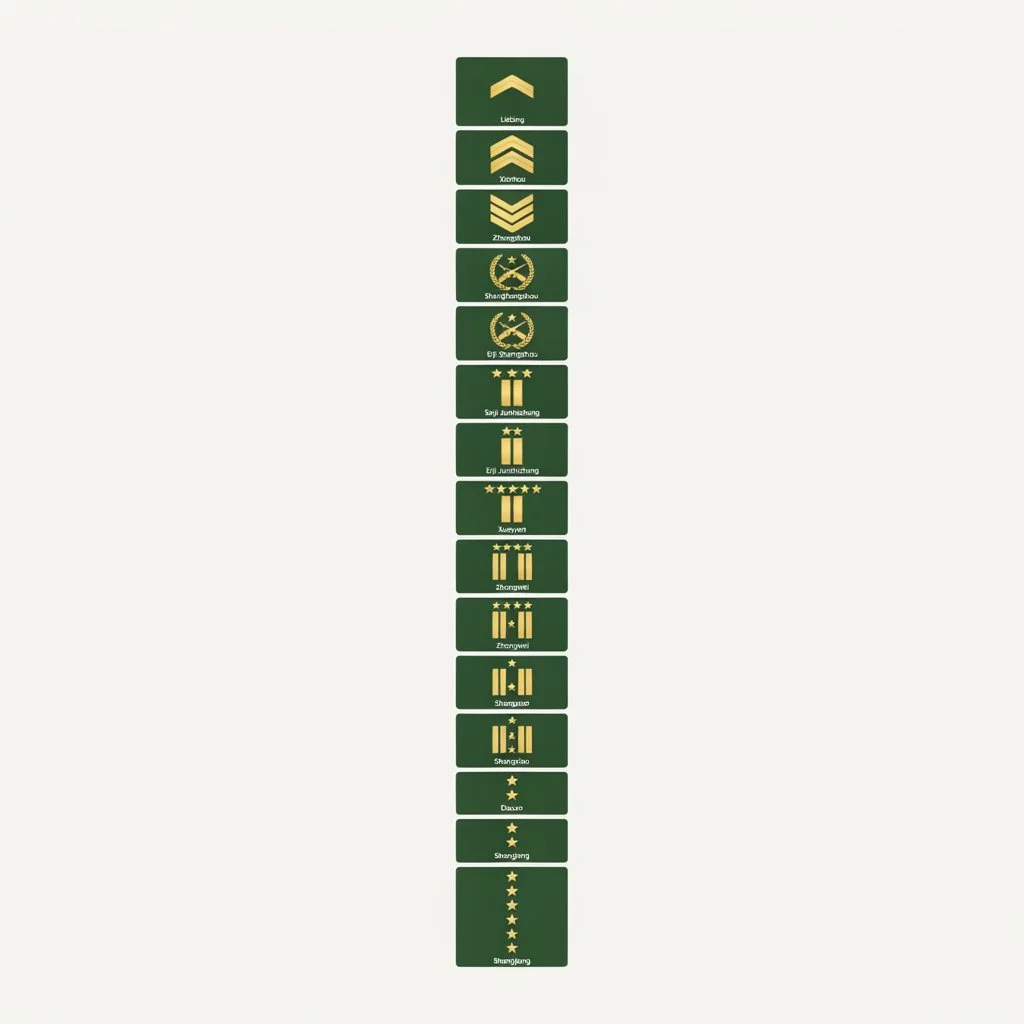
The following hierarchy organizes the ranks and statuses described in the provided text, from the lowest enlisted level to the highest general officer rank.
Rank Hierarchy
- Liebing
- Shangdengbing
- Xiashou
- Zhongshou
- Erji Shangshou
- Yiji Shangshou
- Sanji Junshizhang
- Erji Junshizhang
- Yiji Junshizhang
- Xueyuan
- Shaowei
- Zhongwei
- Shangwei
- Xiaoxiao
- Zhongxiao
- Shangxiao
- Daxiao
- Shaojiang
- Zhongjiang
- Shangjiang
1. Enlisted Ranks
Liebing
Level: Lowest enlisted rank in the People's Liberation Army Ground Force and the first stage of mandatory military service.
Western Equivalent: Roughly equivalent to a private in many Western armies.
Command Authority: Personnel at this level hold no command authority and operate under direct supervision within a squad formation.
Responsibilities: Basic combat training, weapons qualification, physical conditioning, and integration into unit operations.
Typical Service: Soldiers typically serve approximately 1 year at this rank before promotion to private first class, provided required training standards and evaluations are successfully completed.
Shoulder Board Insignia: Dark green base with a single gold chevron.
Shangdengbing
Level: Second and final rank held by initial conscripts in the People's Liberation Army Ground Force.
Western Equivalent: Roughly equivalent to a private first class in many Western armies.
Command Authority: Personnel continue to serve without command authority.
Responsibilities: Squad-level training, weapons qualification, field exercises, and routine operational duties under supervision.
Typical Service: Soldiers are typically promoted to this rank after completing 1 year of service and remain here during their second year of mandatory enlistment before either demobilization or selection for continued professional service.
Shoulder Board Insignia: Dark green base with two gold chevrons.
2. Junior Non-Commissioned Officer Ranks
Xiashou
Level: First non-commissioned officer rank and the beginning of junior enlisted leadership.
Western Equivalent: Equivalent to a corporal in many armies worldwide.
Command Authority: Limited supervisory authority; typically serves as deputy squad leaders or small team leaders within a squad of approximately 8 to 10 soldiers.
Responsibilities: Assisting in training, maintaining discipline, and ensuring orders are properly executed.
Typical Service: Personnel generally serve several years at this rank before promotion to sergeant, depending on performance and service requirements.
Shoulder Board Insignia: Dark green base with one gold chevron below crossed rifles on a gold laurel wreath.
Zhongshou
Level: Junior non-commissioned officer rank.
Western Equivalent: Equivalent to a sergeant in many armies worldwide.
Command Authority: Typically serves as full squad leaders, exercising direct authority over approximately 9 to 12 soldiers.
Responsibilities: Supervising daily training, enforcing discipline, coordinating tactical movement, and ensuring mission readiness at the squad level.
Typical Service: Personnel generally serve multiple years at this rank before promotion, subject to performance evaluations and professional development requirements.
Shoulder Board Insignia: Dark green base with one thick gold chevron below crossed rifles on a gold laurel wreath.
3. Intermediate Non-Commissioned Officer Ranks
Erji Shangshou
Level: Intermediate non-commissioned officer rank and advancement beyond junior NCO leadership.
Western Equivalent: Roughly equivalent to a staff sergeant second class in many Western armies.
Command Authority: Commonly serves as senior squad leaders or assistant platoon sergeants, exercising authority over 25 to 40 soldiers within a platoon structure through subordinate squad leaders.
Responsibilities: Coordinating training, maintaining discipline across multiple teams, and supporting platoon-level operations.
Typical Service: Personnel typically serve approximately 3 years at this rank before promotion.
Shoulder Board Insignia: Dark green base with two gold chevrons of varying thickness below crossed rifles on a gold laurel wreath.
Yiji Shangshou
Level: Intermediate non-commissioned officer rank and the senior level within the intermediate NCO tier.
Western Equivalent: Roughly equivalent to a staff sergeant first class in many Western armies.
Command Authority: Commonly serves as platoon sergeants or senior technical supervisors, overseeing 25 to 40 soldiers within a platoon-sized element.
Responsibilities: Coordinating training plans, enforcing standards across multiple squads, and advising junior NCOs.
Typical Service: Personnel typically serve approximately 3 years at this rank before promotion.
Shoulder Board Insignia: Dark green base with two thick gold chevrons below crossed rifles on a gold laurel wreath.
4. Senior Non-Commissioned Officer Ranks
Sanji Junshizhang
Level: Senior non-commissioned officer rank and the beginning of the senior NCO tier.
Western Equivalent: Roughly equivalent to a master sergeant third class in many Western armies.
Command Authority: Commonly serves as platoon sergeants or company-level senior enlisted supervisors, exercising authority over 40 to 120 soldiers through subordinate NCOs.
Responsibilities: Maintaining training standards, enforcing discipline across multiple platoons, and advising officers on enlisted matters.
Typical Service: Personnel typically serve approximately 4 years at this rank before promotion.
Shoulder Board Insignia: Dark green base with three gold chevrons, with two thicker than the third one, below crossed rifles on a gold laurel wreath.
Erji Junshizhang
Level: Senior non-commissioned officer rank representing advancement within the senior NCO tier.
Western Equivalent: Roughly equivalent to a master sergeant second class in many Western armies.
Command Authority: Commonly serves as senior company-level enlisted leaders or battalion-level technical supervisors, exercising authority over 100 to 300 soldiers through subordinate NCOs and platoon leaders.
Responsibilities: Overseeing training execution, maintaining operational standards, and advising commanders on enlisted personnel management.
Typical Service: Personnel typically serve approximately 4 years at this rank before promotion.
Shoulder Board Insignia: Dark green base with three thick gold chevrons below crossed rifles on a gold laurel wreath.
Yiji Junshizhang
Level: Highest non-commissioned officer rank and the peak of senior enlisted leadership.
Western Equivalent: Roughly equivalent to a master sergeant first class in many Western armies.
Command Authority: Commonly serves as battalion-level senior enlisted advisors or high-level technical supervisors, exercising authority over 300 to 800 soldiers through subordinate NCOs and platoon leaders.
Responsibilities: Overseeing large-scale training coordination, enforcing professional standards across units, and advising commanders on enlisted force management.
Typical Service: Personnel typically serve approximately 4 years at this rank before retirement or senior appointment.
Shoulder Board Insignia: Dark green base with four gold chevrons, with three thicker than the fourth one, below crossed rifles on a gold laurel wreath.
5. Officer Cadet Status
Xueyuan
Status: Officer cadet in the People's Liberation Army Ground Force.
Nature: Not a commissioned rank but a pre-commissioning status within the officer development system.
Command Authority: Personnel at this level do not hold command authority over operational units.
Responsibilities: Academic instruction, military theory, physical training, and leadership preparation.
Completion: Upon successful completion of required training and evaluation, cadets are commissioned as second lieutenants in the PLA Ground Force.
Shoulder Board Insignia: Dark green base with a single vertical gold stripe.
6. Junior Commissioned Officer Ranks
Shaowei
Level: Lowest commissioned officer rank and entry into the officer corps.
Western Equivalent: Roughly equivalent to a second lieutenant in many Western armies.
Command Authority: Typically serves as platoon leaders, exercising direct command over approximately 25 to 40 soldiers.
Responsibilities: Leading tactical training, supervising platoon operations, maintaining discipline, and executing orders issued by company commanders.
Typical Service: Officers generally serve around 2 to 3 years at this rank before promotion, subject to performance evaluations and professional military education requirements.
Shoulder Board Insignia: Dark green base with a single gold star above a vertical gold stripe.
Zhongwei
Level: Junior commissioned officer rank representing advancement beyond second lieutenant.
Western Equivalent: Roughly equivalent to a first lieutenant in many Western armies.
Command Authority: Typically continues serving as platoon leaders or may act as deputy company commanders, exercising authority over 25 to 40 soldiers within a platoon structure.
Responsibilities: Supervising training execution, managing administrative tasks, and assisting in operational planning at the company level.
Typical Service: Officers generally serve approximately 3 years at this rank before promotion.
Shoulder Board Insignia: Dark green base with two gold stars aligned above a vertical gold stripe.
7. Company Grade Commissioned Officer Rank
Shangwei
Level: Company grade commissioned officer rank and full company-level leadership.
Western Equivalent: Roughly equivalent to a captain in many Western armies.
Command Authority: Typically serves as company commanders, exercising command over approximately 100 to 150 soldiers organized into multiple platoons.
Responsibilities: Overseeing tactical training, operational readiness, discipline enforcement, administrative management, and implementation of higher command directives.
Typical Service: Officers generally serve around 3 to 4 years at this rank before promotion, subject to performance evaluations and completion of required professional military education.
Shoulder Board Insignia: Dark green base with three gold stars aligned above a vertical gold stripe.
8. Field Grade Commissioned Officer Ranks
Xiaoxiao
Level: Field grade commissioned officer rank marking the transition from company-level command to battalion-level staff responsibility.
Western Equivalent: Roughly equivalent to a major in many Western armies.
Command/Role: Typically serves as battalion executive officers, operations officers, or senior staff planners, supporting formations of approximately 300 to 800 soldiers.
Responsibilities: Coordinating training schedules, supervising operational planning, managing logistics oversight, and assisting battalion commanders in mission execution.
Typical Service: Officers generally serve approximately 4 years at this rank before promotion.
Shoulder Board Insignia: Dark green base with one gold star centered between two vertical gold stripes.
Zhongxiao
Level: Senior field grade commissioned officer rank representing advanced battalion-level leadership.
Western Equivalent: Roughly equivalent to a lieutenant colonel in many Western armies.
Command Authority: Typically serves as battalion commanders or senior regimental staff officers, exercising authority over 300 to 800 soldiers within a battalion formation.
Responsibilities: Directing tactical operations, supervising training programs, managing administrative structures, and implementing operational plans issued by higher headquarters.
Typical Service: Officers generally serve around 4 to 5 years at this rank before promotion.
Shoulder Board Insignia: Dark green base with two gold stars aligned vertically between two vertical gold stripes.
Shangxiao
Level: Senior field grade commissioned officer rank representing high-level regimental leadership.
Western Equivalent: Roughly equivalent to a colonel in many Western armies.
Command Authority: Typically serves as regimental commanders or brigade-level deputy commanders, exercising authority over approximately 1,000 to 3,000 soldiers depending on the formation.
Responsibilities: Overseeing operational readiness, coordinating large-scale training exercises, supervising subordinate battalions, and implementing strategic directives issued by higher headquarters.
Typical Service: Officers generally serve approximately 4 to 5 years at this rank before promotion to the general officer tier.
Shoulder Board Insignia: Dark green base with three gold stars aligned vertically between two vertical gold stripes.
Daxiao
Level: Senior field grade commissioned officer rank above colonel but below the general officer tier.
Western Equivalent: Roughly equivalent to a senior colonel in many Western-aligned classification systems, though some countries do not use an exact equivalent.
Command Authority: Typically serves as brigade commanders or deputy division commanders, exercising authority over approximately 3,000 to 6,000 soldiers depending on the formation.
Responsibilities: Directing large-scale operational planning, supervising subordinate regiments, and implementing theater-level directives.
Typical Service: Officers generally serve approximately 4 to 5 years at this rank before promotion to major general.
Shoulder Board Insignia: Dark green base with four gold stars aligned vertically between two vertical gold stripes.
9. General Officer Ranks
Shaojiang
Level: Lowest general officer rank and entry into the general officer tier.
Western Equivalent: Roughly equivalent to a major general in many Western armies.
Command Authority: Typically serves as division commanders or deputy core-level commanders, exercising authority over formations of approximately 10,000 to 20,000 soldiers depending on operational structure.
Responsibilities: Directing large-scale combat readiness, overseeing multi-brigade operations, and implementing strategic directives issued by higher theater commands.
Typical Service: Officers generally serve several years at this rank before promotion.
Shoulder Board Insignia: Dark green base with one gold star above a gold laurel emblem.
Zhongjiang
Level: Senior general officer rank representing high-level operational command.
Western Equivalent: Roughly equivalent to a lieutenant general in many Western armies.
Command Authority: Typically serves as core commanders or deputy theater commanders, exercising authority over formations ranging from approximately 30,000 to 100,000 personnel depending on the command structure.
Responsibilities: Overseeing large-scale operational planning, coordinating multi-division formations, and implementing national-level defense directives within their assigned command.
Typical Service: Officers generally serve several years at this rank before promotion.
Shoulder Board Insignia: Dark green base with two gold stars above a gold laurel emblem.
Shangjiang
Level: Highest general officer rank in the People's Liberation Army Ground Force and the apex of military leadership below the Central Military Commission.
Western Equivalent: Roughly equivalent to a general in many Western armies.
Command Authority: Typically serves as theater commanders, service chiefs, or senior leaders within the Central Military Commission system, exercising authority over entire theater commands composed of multiple core-level formations, often exceeding 100,000 personnel.
Responsibilities: Directing national-level military strategy, overseeing force modernization, and implementing state defense policy.
Appointment: Appointment to this rank is selective and based on senior leadership designation rather than fixed promotion timelines.
Shoulder Board Insignia: Dark green base with three gold stars above a gold laurel emblem.
| Rank | Typical Service Duration | Role & Responsibility |
|---|---|---|
| Private | Entry Level | Basic soldier responsible for learning military skills, discipline, and supporting unit operations. |
| Senior Private | ~1 Year | Experienced enlisted soldier who assists junior personnel and performs routine operational duties. |
| Junior Sergeant | ~3 Years | Serves as second-in-command of a squad and helps supervise small-unit training and discipline. |
| Sergeant | 5–6 Years | Leads a squad, conducts tactical training, and ensures mission readiness. |
| Senior Sergeant | Several Years | Performs technical, instructional, and specialist leadership duties, often requiring additional education. |
| Master Sergeant 4th Class | N/A | Entry-level master sergeant rank where advanced specialization and leadership responsibilities begin. |
| Master Sergeant 3rd Class | After Further Study | Holds advanced educational qualifications while supporting administration, training, and personnel management. |
| Master Sergeant 2nd Class | Several Years at 3rd Class | Provides senior leadership, mentorship, and guidance to junior non-commissioned officers. |
| Master Sergeant 1st Class | 10–15 Years | Highest enlisted rank, serving as the key advisor between officers and enlisted personnel. |
| Trainee (Officer Cadet) | Officer Training | Undergoes military and leadership training before commissioning as an officer. |
| Second Lieutenant | Junior Officer | Commands a platoon and leads soldiers during training and operations. |
| First Lieutenant | N/A | Typically serves as deputy company commander or senior platoon leader. |
| Captain | 8–10 Years | Commands a company and oversees personnel, training, and operational planning. |
| Major | Field Grade Officer | Leads battalion-level staff functions or commands specialized military units. |
| Lieutenant Colonel | N/A | Acts as deputy regimental commander and supervises training and operational readiness. |
| Colonel | 20+ Years | Commands a regiment and manages large-scale military operations. |
| Senior Colonel | Senior Field Grade | Typically commands a division-sized formation or serves in high-level staff appointments. |
| Major General | General Officer | Commands army groups or major formations and coordinates with government authorities. |
| Lieutenant General | General Officer | Leads theater or regional commands while supporting national defense planning. |
| General | Highest Rank | Provides strategic military leadership, oversees national defense policy, and directs major reforms. |